Articles
Driving in Madinah as a Visitor: Licence, Rules, Tips
Osama Naseer · 17 November 2026 · 19 min
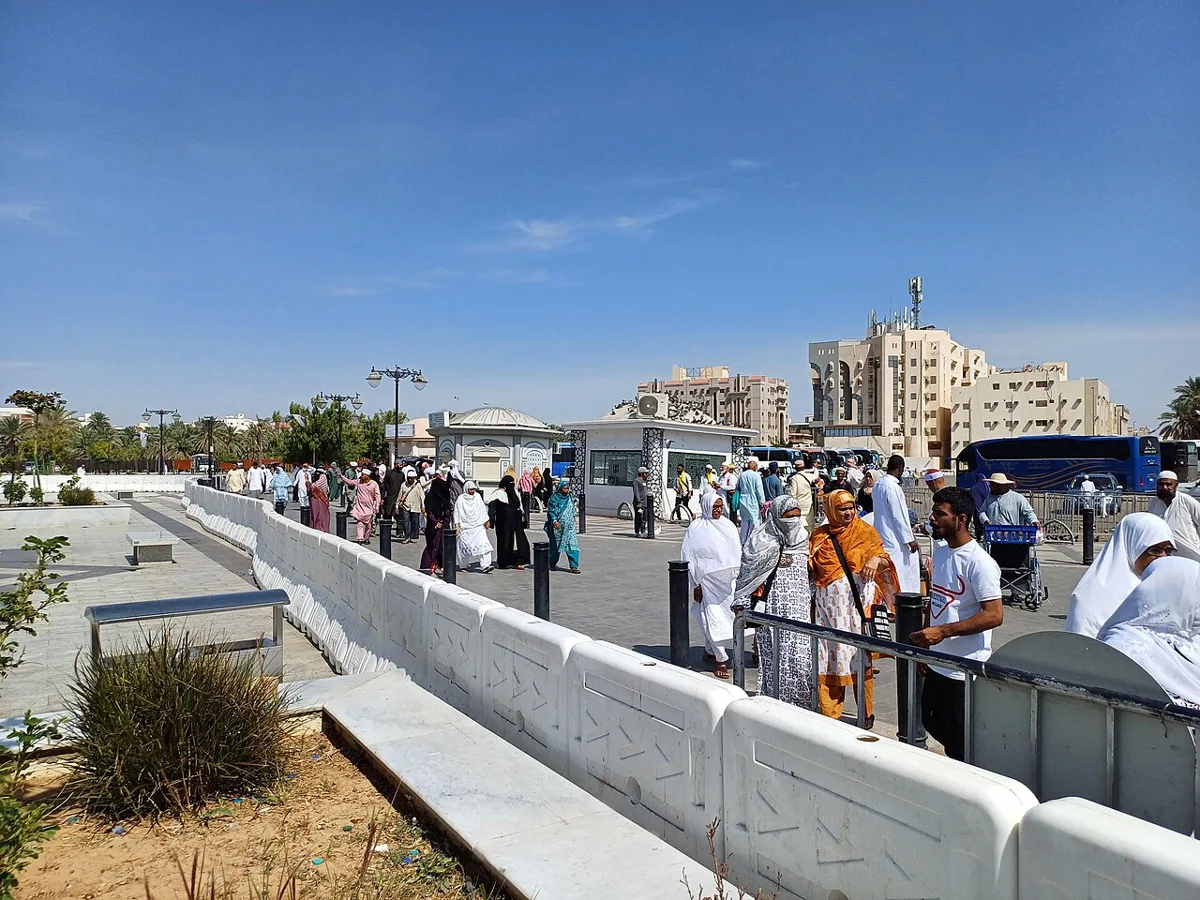
Driving in Madinah is allowed for visitors: the Saudi Traffic Department says a valid foreign or international licence may be used for one year from your entry into the Kingdom, or until it expires if that comes first, as long as it matches the vehicle and has been translated by an accredited body. For most pilgrims, though, a car is useful only for trips outside the centre. Around Masjid an-Nabawi you will mostly be walking, and traffic there is actively managed. Some fines are heavy: running a red light is reported at SAR 3,000 to 6,000.
Driving in Madinah: the short version
| Question | Answer | How sure are we? |
|---|---|---|
| Can I drive on my foreign licence? | Yes, for up to one year from entry, or until it expires if sooner | Traffic Department, reported 1 Sept 2025. UK advice differs for UK licences |
| Do I need an International Driving Permit? | Visit Saudi calls it highly recommended, and many hire companies ask for one | Visit Saudi, page undated |
| Must my licence be translated? | Yes, by an accredited body | Traffic Department; we could not find a list of accredited bodies |
| How old must I be? | 18 to drive, 21 to rent | Gulf News, last updated 18 Nov 2024 |
| Can I drive right up to the mosque? | We found no published rule either way. Expect managed traffic and walk the last part | Could not be confirmed |
| Do unpaid fines stop you leaving? | Unpaid fines must be cleared before you leave the country | UK government advice, updated 27 Oct 2026 |
Do you actually need a car?
Think about this before you think about licences. If your hotel is in the central area, your main journey is on foot, and a hire car may simply sit in a car park at a cost. Our guide to the Madinah airport to Masjid an-Nabawi route shows that the first trip of your stay does not need one.
| Your plan | Better choice | Why |
|---|---|---|
| Staying near the Haram for a few days | Walk, with an occasional taxi | No parking to find and no fine risk on unfamiliar roads |
| A family day visiting Quba, Uhud and Qiblatain | Hire car or a driver for the day | You set the pace, and elders and children can rest between stops |
| Travelling on to Makkah | A coach or other public transport, unless you are happy with long drives | A long desert road after days of little sleep is a real risk |
| Living elsewhere in the Gulf and driving in | Your own car, after the new border steps below | It is often the simplest choice for a family with luggage |
The strongest reason to drive is ziyarah at your own pace. Quba Mosque, Mount Uhud and the martyrs’ graveyard, Masjid al-Qiblatain and the Seven Mosques are all spread beyond the central area. If that is your only reason, compare the cost of a hire car with the fares for taxis in Madinah or the Madinah city buses first.
Your licence: what the Traffic Department says
The clearest statement we could open is the Okaz report of 1 September 2025, which relays a post by the Traffic Department on its official X account. Gulf News reported the same conditions on 14 July 2025, and gave the one-year period in a report last updated on 26 September 2023. The conditions are:
- The licence must match the vehicle. A car licence covers a car. Do not assume it covers a large people carrier or a minibus if your home licence separates those classes.
- It must be translated by an accredited body. Gulf News, last updated 18 November 2024, says tourists on a visit visa need an International Driving Permit legally translated into Arabic by an accredited authority. We could not find an official list of which bodies count.
- One year only. The clock runs from your date of entry into the Kingdom, or stops when the licence expires, whichever comes first.
None of the reports we read separates Umrah, tourist or family visit visas. They simply say “visitor”. We also found nothing that treats men and women differently.
Where the sources disagree
UK government advice, updated 27 October 2026, tells British visitors they may use a UK photocard licence for the first three months and must then apply for a local licence. That is shorter than the one year given by the Traffic Department. A short visit falls within both, so most pilgrims will not be affected. If you are staying longer than three months on a UK licence, ask the Traffic Department before relying on the longer figure.
Sources also differ on the permit. Visit Saudi’s road trip guide calls an International Driving Permit highly recommended rather than compulsory, and says many hire companies require one. The Traffic Department’s own conditions, as reported, speak of a foreign or international licence with an accredited translation. The practical answer is to carry all of it.
What to carry in the car
- Your original licence, plus an International Driving Permit if you have one
- An Arabic translation from an accredited body. Ask your hire company or hotel where to get one before you need it
- A copy of your passport and visa. UK advice says tourists must carry ID, and that not doing so can bring a fine or prison
- Vehicle registration and insurance papers. Not carrying your licence and registration was reported at SAR 150 to 300 in January 2020
- Your hotel’s map pin, and the apps you rely on for Umrah with working data
If you live in the Gulf
The Traffic Department says licences issued by GCC countries can be used for their full validity, without the one-year limit. An international permit issued inside a GCC country is a different matter: it is not recognised for driving in the GCC. So if you live in Dubai or Doha, bring your Gulf licence itself and leave the Gulf-issued permit at home. Gulf News’s July 2025 report uses both “citizens” and “residents” for this group, so the exact scope is not perfectly clear. Its November 2024 report says plainly that residents may use their GCC licence.
Renting a car: what to check at the desk
Visit Saudi says car rental is available at airports and in most major cities. We name no company here, because we have not compared them and have no evidence that would support a recommendation. These are the points worth checking, whichever you use:
- Age and documents. Gulf News, last updated 18 November 2024, gives a minimum rental age of 21. It lists a passport valid for six months, a copy of your visa, and your licence, plus a permit valid for at least three months if you are using one. Confirm these in writing, because terms vary.
- The daily kilometre limit. Visit Saudi warns that many rental cars have one. Work out your distances first, then ask whether an open-kilometre plan is available.
- Insurance. Ask what the excess is, what is excluded, and whether your own travel insurance adds anything. Driving without valid insurance is itself an offence, reported at SAR 100 to 150 in July 2024, so ask to see the policy.
- Fines. Ask how traffic fines reach you, whether the company adds a fee, and how long after your return it can charge you. We found no official rule on this, so the contract is what counts.
- Damage. Photograph the car with the hire company’s representative before you leave, including the tyres and windscreen.
Saudi road rules and fines, each with its date
Saudi fines are set as a range, and the older figures you will find online are often out of date. Most of the Arabic reports print them as a pair with no label, such as 6,000/3,000. We show these as minimum to maximum, because the Traffic Department has described the red light fine in exactly those words. Treat every figure below as dated, and check the department’s channels if you need certainty.
| Offence | Reported fine (SAR) | Date of the report |
|---|---|---|
| Running a red light | 3,000–6,000 | 26 Nov 2023 (Okaz); 29 Apr 2024 (Ajel) |
| Driving against the flow of traffic | 3,000–6,000. An older list gave 500–900 | 9 Jul 2024 (Al-Madina). Older figure 9 Jan 2023 (Gulf News) |
| Handheld phone or device while driving | 500–900 | 2 Jul 2026 (Ajel) |
| Not stopping fully at a stop sign | 500–900 | 9 Jan 2023 (Gulf News) |
| Child safety seat not used | 300–500. An older list gave 150–300 | 9 Jul 2024 (Al-Madina). Older figure 9 Jan 2023 (Gulf News) |
| No precautions when stopped on a public road in an emergency | 300–500 | 9 Jul 2024 (Al-Madina) |
| Driving with an expired licence | 300–500 | 30 Jul 2024 (Gulf News) |
| Seat belt not worn | 150–300 | 9 Jul 2024 (Al-Madina) |
| Driving without a licence | 150–300 | 30 Jul 2024 (Gulf News) |
| Parking where parking is not allowed | 100–150 | 9 Jul 2024 (Al-Madina) |
Gulf News dates are the “last updated” dates shown on its pages. Al-Madina summarised the Traffic Department’s list of frequently asked questions. Okaz and Ajel were relaying the department’s posts on X or its replies to the public.
The seat belt rule covers the front passenger as well as the driver. Ajel reported in August 2020 that a repeat within 30 days raises the fine to its maximum, or leads to the vehicle being held for 24 hours, or both. On phones, the department’s wording in July 2026 covered a driver holding any portable device by hand, so set your maps up before you pull away. Old lists that give SAR 150 to 300 for phones are out of date.
Speeding: the July 2026 table
Ajel published this on 1 July 2026, from a Traffic Department post. Notice how quickly the fine climbs on the faster roads.
| Over the limit by | Limit of 120 km/h or less (SAR) | Limit of up to 140 km/h (SAR) |
|---|---|---|
| Over 5, up to 10 km/h | – | 300–500 |
| Over 10, up to 20 km/h | 150–300 | 800–1,000 |
| Over 20, up to 30 km/h | 300–500 | 1,200–1,500 |
| Over 30, up to 40 km/h | 800–1,000 | Not given in the report |
| Over 40, up to 50 km/h | 1,200–1,500 | 1,500–2,000 (over 40) |
| Over 50 km/h | 1,500–2,000 | 1,500–2,000 (over 40) |
The report leaves a gap on the faster roads between 30 and 40 km/h over. An Al-Madina report from July 2024 put everything above 30 km/h over in the top band. We could not open an official table of the limits themselves, so we give no list of limits by road type. Follow the signs on the road you are on.
The red light trap: turning right
This one catches newcomers, and it costs the same as driving straight through a red light. In a reminder reported by Okaz on 26 November 2023, the Traffic Department said:
- You must stop before turning right, to check that the junction is clear and to give way to traffic.
- Do not turn right on red if a red arrow is lit or a “no right turn” sign is posted. That counts as running the light.
- If the corner has a triangular island, turn before it. Turning after the triangle counts as running the light.
- Stay in the right-hand lane before you turn. Where there is a service road, turn onto it.
Reading the road
Visit Saudi’s guide has practical advice that most visitors would not think of:
- Learn the Arabic numerals 1 to 10, because speed limit signs are often in Arabic.
- Red signs generally prohibit: stop, do not enter, or wrong way. Octagons mean stop, and diamonds warn of hazards.
- Green signs give street information, brown signs often point to religious or cultural sites, and white boards often mark places such as downtown or hospitals.
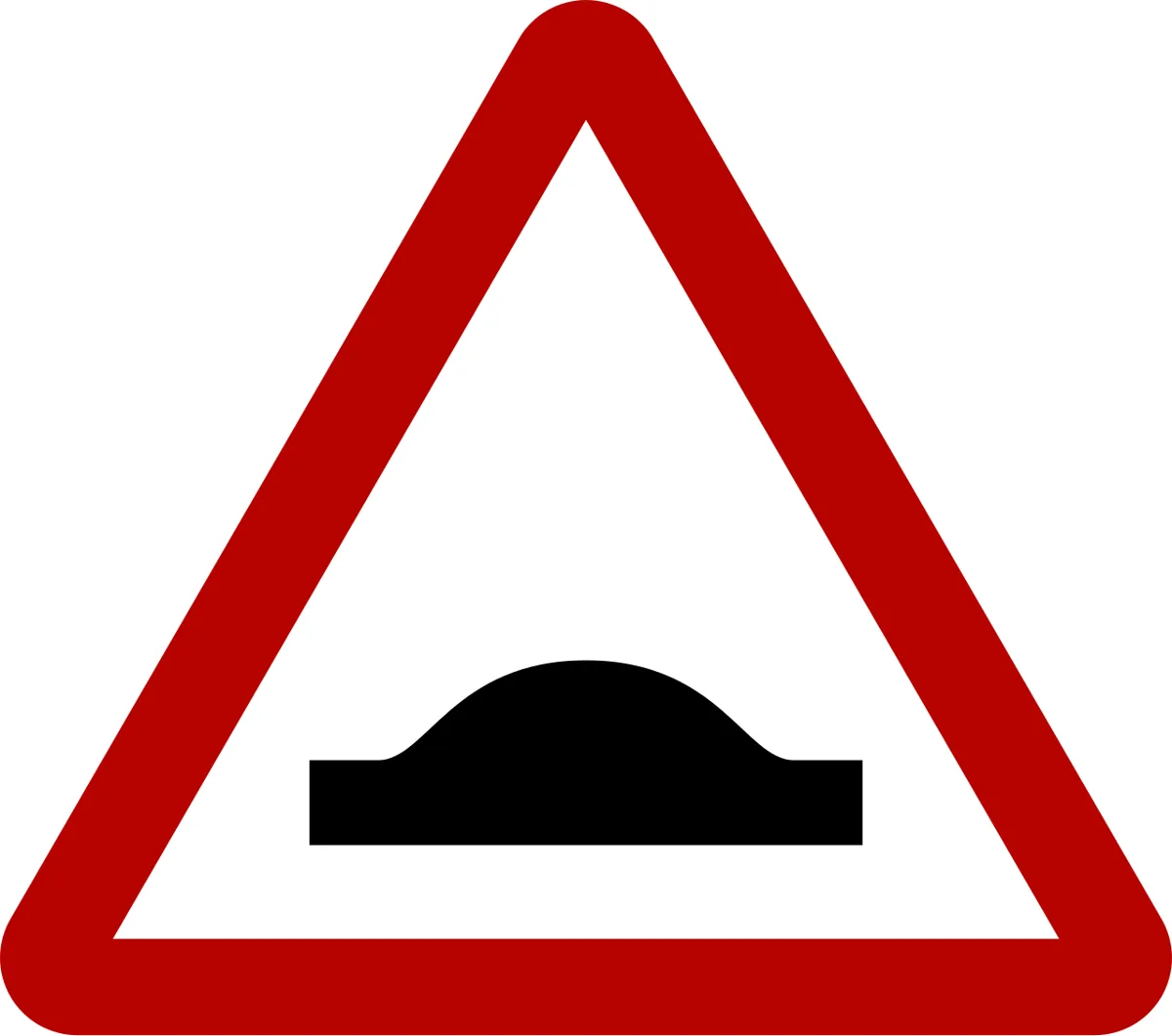
- If cars in front switch on their hazard lights, slow down. It generally means speed bumps or cameras are ahead.
- Out of respect, avoid playing music in the car during the call to prayer.
How fines reach you, and how to clear them
UK government advice says some cities have an automated traffic system, that offenders are told of a fine by text, and that fines are recorded on Absher against your passport, residency or ID card. So you may not know about a camera fine until the text arrives. Keep the phone number you gave working, and do not rely on that text alone.
- Check before you fly. Gulf News described the steps on 11 January 2023. On absher.sa, choose individuals, then under public services the visitor traffic violation query, enter a passport or border number, complete the security check and view. No account was needed. Your border number is on your visit visa and starts with 3. The Absher site refused connections from our checker, so we could not confirm that the menu is unchanged.
- Clear them before you leave. UK advice says outstanding fines must be paid before departure, and that payment at the airport is possible only in Saudi office hours. A late-night flight is a bad time to find one.
- Know the discount. Al-Madina reported on 9 July 2024 that violations from 18 April 2024 get 25% off if paid within 45 days of being recorded, and that you have 30 days to object. The report does not say whether this works differently for visitors.
Near Masjid an-Nabawi: what we could confirm
Most drivers want to know how close they can get. We looked for a current published rule on which vehicles may enter the streets around the mosque, and at what times. We did not find one. Here is what the sources do support:
- The roads to the mosque are actively managed. Okaz reported on 16 March 2026 that Madinah’s traffic department was running a Ramadan plan for the roads leading to the Prophet’s Mosque, with pedestrian paths, traffic directed according to crowd density, and smart traffic technology. A March 2025 report described the same approach. Neither listed specific closures.
- There is an official car park at the mosque. The Saudi Press Agency reported on 22 February 2026 that it has 24 units of 184 vehicles each, which works out at 4,416 spaces. Its four entrances are on Abu Bakr Al-Siddiq Road (north), Quba Road (south), Omar bin Al-Khattab Road (west) and Prince Abdulmohsen Road (south). There are 48 payment kiosks and QR payment on tickets. Details of parking near Masjid an-Nabawi and its prices are a separate topic.
- Busy seasons change the rules. Gulf News reported in May 2026 that Madinah’s public buses would stop for part of Hajj 1447 to improve traffic flow, with dedicated shuttles to the Prophet’s Mosque and Quba Mosque still running. Expect arrangements to change in Ramadan and around Hajj, and check when Madinah is busiest.
So plan as if you may be turned away. Ask your hotel before you arrive where a car can stop and whether it has parking. Avoid arriving in the run-up to a prayer, using Madinah prayer times. Follow officers’ directions over your sat-nav, and be ready to walk the last part across the piazza. You can compare hotels by distance from the mosque if a car is part of your plan.
Haram-area signs on the roads into the city
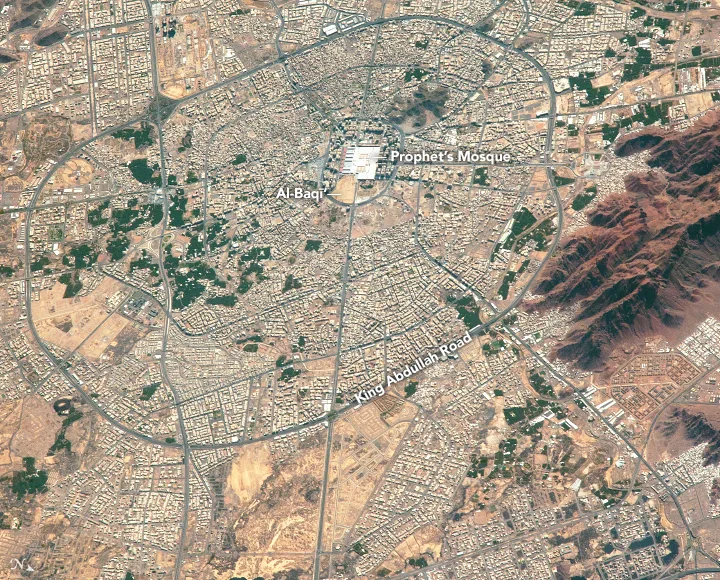
Non-Muslim drivers need to be careful here, and we could not find a current official statement of the boundary. Sources differ. A NASA note with the 2017 photo at the top of this page says the core haram zone is generally within King Abdullah Road, whose ring is about 7 to 9 km across, and is open only to Muslims. A 2002 Arab News answer described a 12-mile radius. In May 2021, Middle East Monitor reported that “Muslims only” appeared to have been replaced by “Haram area” on highway signs to Madinah, with no official explanation. If you are not Muslim, or travelling with someone who is not, ask your hire company and the authorities before setting a route, and read about whether non-Muslims can visit Madinah.
Arriving by road from the Gulf
Two recent changes matter if you are driving in from a neighbouring country:
- Absher Safar for Visitors. The Ministry of Interior launched this on 26 October 2026 for GCC citizens and visitors arriving at any land port, according to Okaz and Asharq Al-Awsat. In the Absher app you enter your nationality, mobile number, document, port, expected date, vehicle details and insurance before the trip. It becomes compulsory six months after launch, which by our count is around late April 2027.
- The 90-day limit. From 26 August 2026, GCC-registered private vehicles owned by Saudi citizens or non-GCC residents of the Kingdom may stay for 90 days in a 365-day period, with fines of SAR 1,000 to 2,000 for overstaying, according to Gulf News on 23 August 2026. It is aimed at people living in Saudi Arabia, not at a pilgrim on a two-week visit, but check it if you are buying or borrowing a car.
Long drives out of the city
This is where the serious risk is. UK advice warns of poor driving standards and many serious accidents. It says to always wear seat belts, keep to major roads where possible, and travel in convoy and in daylight through desert areas. Visit Saudi adds that the country is large, so you should refuel often.
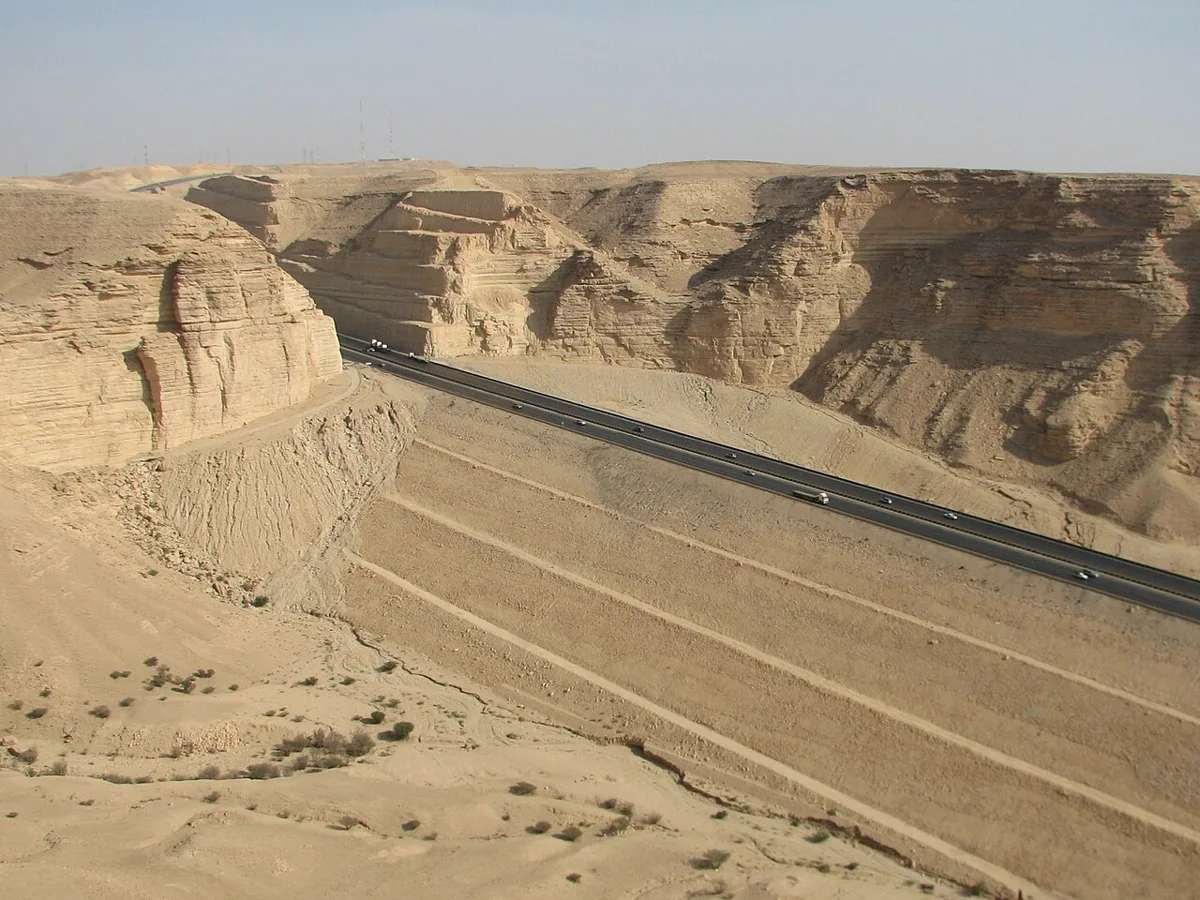
Three common trips each have their own planning. If you are heading to Makkah for Umrah, plan your stop at the Miqat Mosque at Dhul Hulayfah and read about entering ihram from Madinah. If you would rather not drive that road, compare the Madinah to Makkah bus. For a longer historical trip, see the route notes for Madinah to AlUla or visiting Badr. Check the Madinah weather as well, and carry more water than you expect to need in the hot months.
If you have an accident
These steps come from a Gulf News guide last updated on 11 September 2024. Save the numbers before you set off, and see also Saudi emergency numbers.
- Check for injuries. Call 997 if anyone needs medical help.
- Switch on your hazard lights, and place a reflective triangle behind the car if you have one.
- Photograph the scene from several angles. In a minor accident, move to a safe spot so you do not block traffic.
- If at least one vehicle is insured, contact Najm on 199033, or on WhatsApp at 920000560. A surveyor assesses the scene and issues the report you need for an insurance claim.
- For a serious accident, or if neither vehicle is insured, call Muroor on 993.
- Stay at the scene, because leaving can lead to fines. Have your licence, registration and insurance papers ready, and ring your hire company as soon as it is safe to do so.
Common mistakes to avoid
- Using an old fine list. Pages that show SAR 150 for a phone offence are years out of date. The July 2026 figure is SAR 500 to 900.
- Treating the right turn as free. Stop first, and turn before the triangle.
- Bringing a Gulf-issued international permit. It is not recognised. Bring the licence itself.
- Skipping the translation. It is one of the Traffic Department’s stated conditions, even if a hire desk does not ask for it.
- Leaving fines to the airport. Run the visitor check a few days before your flight, not on the way to it.
- Driving through the night to save a hotel bill. After a long day of worship, a desert road in the dark is the worst choice you can make.
If this is your first visit, keep the driving to the outer sights and start with our first visit guide to Masjid an-Nabawi and our guide on how to get to Madinah.
Frequently asked questions
❓Can a tourist or Umrah visitor drive in Madinah?
Yes. The Traffic Department says a visitor may use a valid foreign or international licence for one year from entry, or until it expires if sooner. It must match the vehicle and be translated by an accredited body. The reports we read do not separate visa types.
❓Do I need an International Driving Permit in Saudi Arabia?
Visit Saudi calls it highly recommended, and many hire companies require one. Gulf News adds that tourists on a visit visa need it legally translated into Arabic. A permit issued in a GCC country is not recognised, so Gulf residents should bring their GCC licence.
❓What is the fine for running a red light in Saudi Arabia?
SAR 3,000 to 6,000, as reported from the Traffic Department in November 2023 and April 2024. Turning right after the triangular island, or against a red arrow, counts as running the light.
❓Can I drive right up to Masjid an-Nabawi?
We could not find a current published rule on this. The traffic department manages the roads to the mosque according to crowd density, and there is an official car park with four entrances. Ask your hotel where a car can stop, and be ready to walk.
❓How do I check for traffic fines as a visitor?
Gulf News described a public visitor query on absher.sa in January 2023, using a passport or border number with no account needed. We could not reach the site ourselves. UK advice says outstanding fines must be paid before you leave the country.
❓Can women drive in Madinah as visitors?
The licence conditions reported by the Traffic Department do not treat men and women differently, and Visit Saudi describes a growing number of women driving in the Kingdom. The same licence, translation and vehicle conditions apply.
How we checked this article: we opened Traffic Department statements as reported by Okaz, Ajel and Al-Madina, Visit Saudi’s road trip guide and its story on women driving, the Saudi Press Agency, GOV.UK travel advice, Gulf News, Asharq Al-Awsat, Arab News, Middle East Monitor and a NASA image note on Wikimedia Commons. The Ministry of Interior and Absher websites refused connections from our tools, so we could not read their fine tables directly. Rules and fines change, so check the Traffic Department’s official channels for anything that matters to you. This article is general information, not legal advice. We have not driven these routes for this article. Last checked 12 November 2026.
Related reading
Taxi in Madinah: Careem vs Uber vs Street Taxi Fares
Taxi in Madinah: dated meter rates, Uber's published fares, what Careem publishes, the free-ride meter rule, licensed-taxi checks and how to complain.
Saudi Laws for Tourists: What to Know Before You Visit
Saudi laws for tourists explained: dated fines for dress and filming, banned goods, medicine permits, visa overstays and social media risks.
#Transport #Getting around Madinah #Driving #Saudi rules