Articles
The 40 Prayers in Madinah Hadith: Proof It Is Authentic
Osama Naseer · 31 October 2026 · 12 min
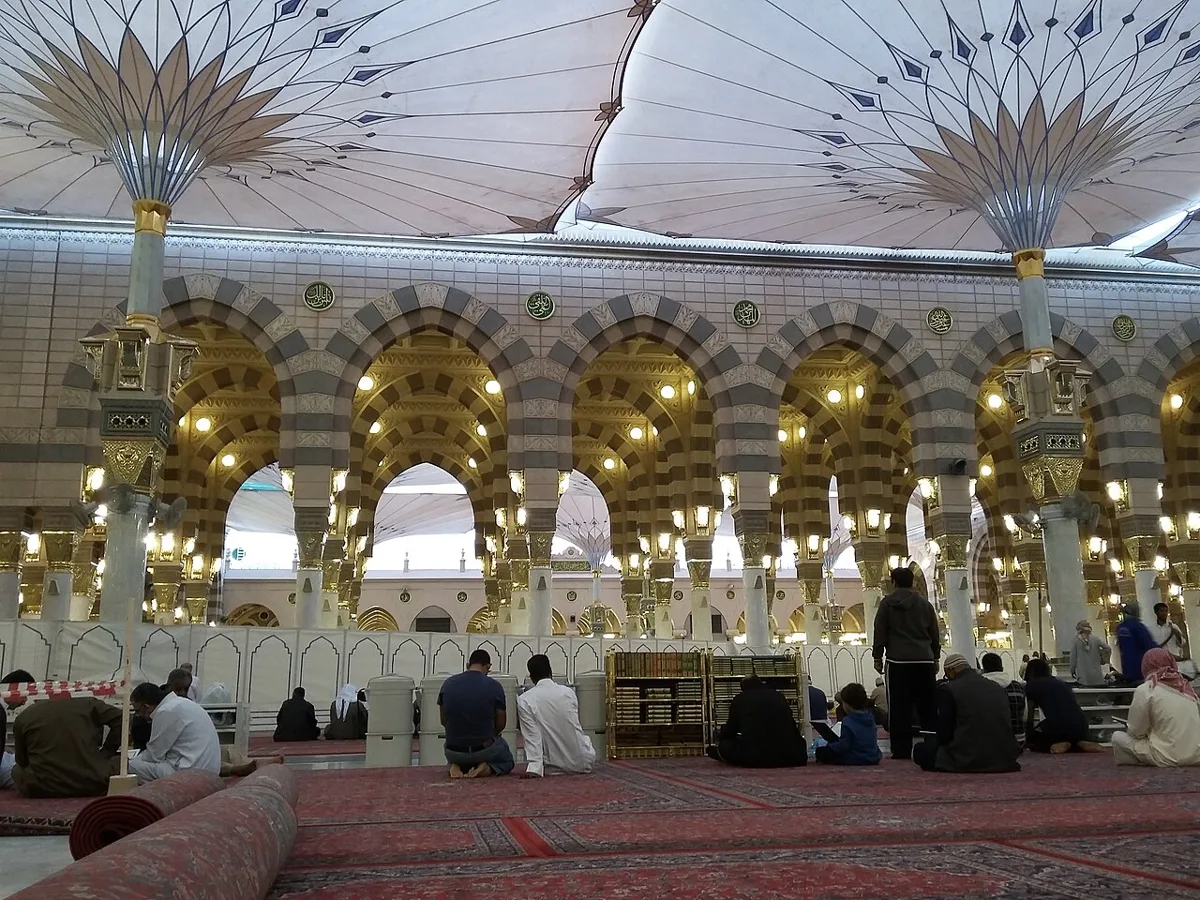
The hadith on 40 prayers in Madinah is recorded by Imam Ahmad and Imam al-Tabarani from Sayyiduna Anas ibn Malik رضی اللہ عنہ, and the great hadith masters Imam al-Mundhiri and Imam al-Haythami both affirmed the reliability of its narrators. For the Ahl al-Sunnah wa al-Jama’ah, it is a hadith to accept with love and to act upon: whoever prays forty prayers in the mosque of the Beloved Prophet ﷺ, without missing one, is promised freedom from the Fire, safety from punishment and freedom from hypocrisy. This article sets out the text, the chain, the verdicts of the scholars and the proofs, and then shows you how to complete the forty on your own journey to Madinah Munawwarah.
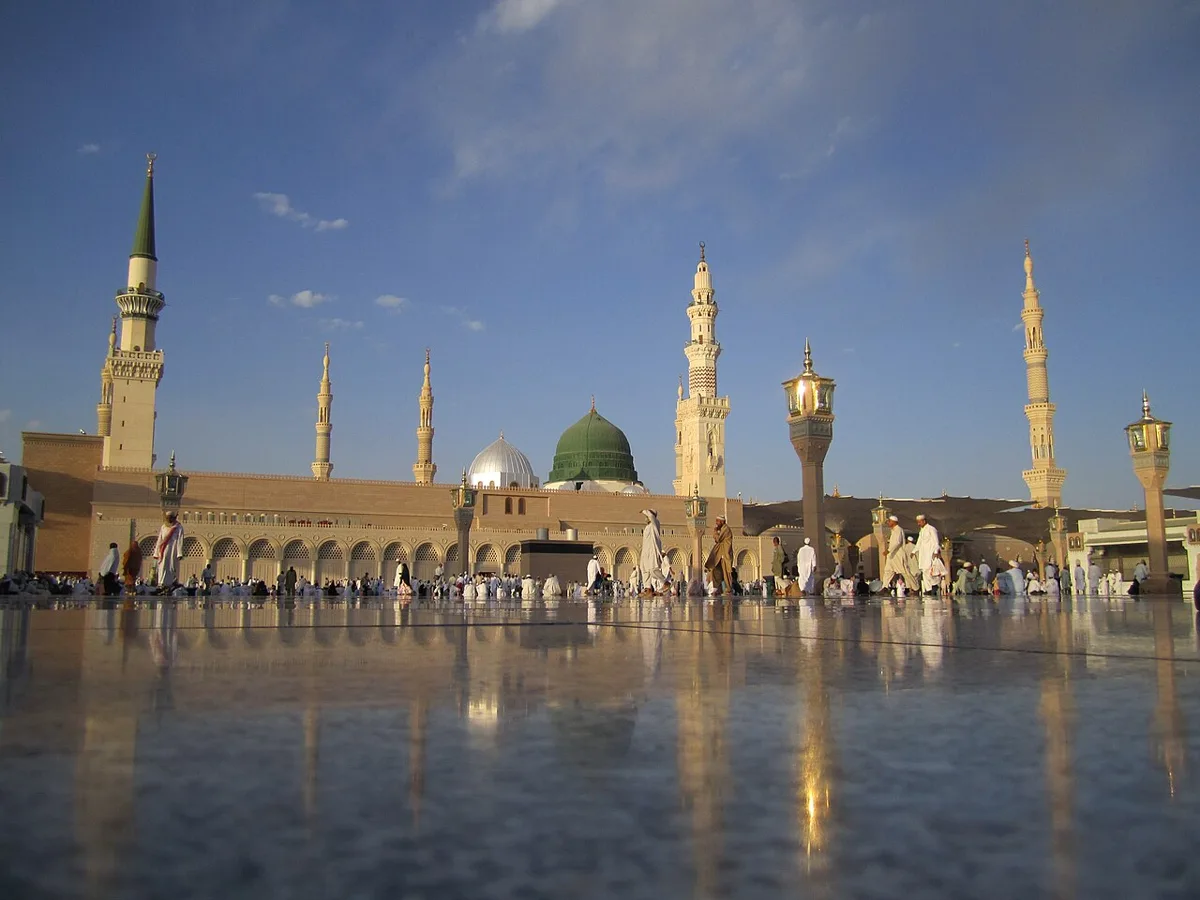
What the hadith on 40 prayers in Madinah says
Sayyiduna Anas ibn Malik رضی اللہ عنہ, who served the Messenger of Allah ﷺ for ten years, reports this glad tiding. The Arabic text, as recorded in the Musnad of Imam Ahmad, reads:
من صلى في مسجدي أربعين صلاة، لا يفوته صلاة، كتبت له براءة من النار، ونجاة من العذاب، وبرئ من النفاق
In English: “Whoever prays forty prayers in my mosque, not missing a single prayer, there will be written for him freedom from the Fire, salvation from punishment, and he will be free of hypocrisy.”
Consider what is being promised. Three of the greatest things a believer could ask for are tied to a simple act of love: staying close to the Beloved ﷺ and praying in his mosque, prayer after prayer. It is no wonder that Muslims have carried this hadith in their hearts on their way to Madinah.
Where the hadith is recorded
This narration appears in major works of hadith, and in the books scholars wrote specifically to encourage good deeds. You may see different numbers online because printed editions number their hadiths differently. These refer to the same narration, not to different hadiths.
| Book | Reference |
|---|---|
| Musnad of Imam Ahmad ibn Hanbal | No. 12583 (al-Risalah edition, 20/40); vol. 3, p. 155 in the older edition |
| Al-Mu’jam al-Awsat of Imam al-Tabarani | No. 5444 (5/325); some editions list 5440 |
| Al-Targhib wa al-Tarhib of Imam al-Mundhiri | 2/139 |
| Majma’ al-Zawa’id of Imam al-Haythami | 4/8, no. 5878 |
The chain of narrators
The chain recorded in the Musnad runs as follows:
Al-Hakam ibn Musa → Abd al-Rahman ibn Abi al-Rijal → Nubayt ibn Umar → Sayyiduna Anas ibn Malik رضی اللہ عنہ → the Messenger of Allah ﷺ
Scholars of hadith examine each link in a chain like this one. Here, the discussion focuses on Nubayt ibn Umar, the student who reports from Sayyiduna Anas. The verdicts below show how the masters judged him and the chain.
Proof 1: The verdict of Imam al-Mundhiri
Imam Abd al-Azim al-Mundhiri (d. 656 AH) was one of the leading hadith masters of his age, and his al-Targhib wa al-Tarhib is among the best-known books on the virtues of good deeds. After citing this hadith, he wrote:
رواه أحمد ورواته رواة الصحيح
In English: “Ahmad narrated it, and its narrators are the narrators of the Sahih.” This is high praise. A hadith master who had spent his life studying narrators looked at this chain and placed its men among those of the rigorously authentic collections.
Proof 2: The verdict of Imam al-Haythami
Imam Nur al-Din al-Haythami (d. 807 AH) devoted his Majma’ al-Zawa’id to reviewing thousands of chains in the Musnads and the Mu’jams. His job was precisely to examine narrators. On this hadith he wrote:
رواه أحمد، والطبراني في الأوسط، ورجاله ثقات
In English: “Ahmad narrated it, as did al-Tabarani in al-Awsat, and its narrators are trustworthy.” He also noted that al-Tirmidhi narrated part of its meaning. So here we have two independent masters, separated by more than a century, who reached the same conclusion about the same chain.
Proof 3: Imam Ibn Hibban on Nubayt ibn Umar
Imam Ibn Hibban (d. 354 AH) was a master of the science of narrators and compiled a whole book of those he judged trustworthy, al-Thiqat. He included Nubayt ibn Umar in it (5/483). This is the direct answer to anyone who asks about Nubayt. He is a named narrator from the generation of the Tabi’in, who reports from a great Companion, whose student is known, and whom a great hadith imam listed among the trustworthy.
Centuries later, al-Mundhiri and al-Haythami also spoke well of this chain, as the proofs above show.
Proof 4: Later scholars who affirmed it
This recognition continues into modern times:
- Shaykh Naseeb al-Rifa’i said of this hadith: “It is sound,” as reported by Islamweb’s fatwa centre.
- An Ahl-e-Sunnat fatwa (no. Pin-4911, 13 November 2016) states that the hadith gives glad tidings of freedom from Hell and hypocrisy for forty unbroken prayers here, urges Muslims to strive for this whenever they have the chance, and says the virtue is not limited to Hajj pilgrims, so someone on Umrah or any other visitor can earn it too.
- SeekersGuidance states in a 2025 answer that it is recorded “with a reliable chain of narrators”.
Proof 5: Support from another narration
A hadith gains further strength when its meaning is supported by another report. Imam al-Tirmidhi records in his Jami’ (241), also from Sayyiduna Anas رضی اللہ عنہ:
مَنْ صَلَّى لِلَّهِ أَرْبَعِينَ يَوْمًا فِي جَمَاعَةٍ يُدْرِكُ التَّكْبِيرَةَ الأُولَى كُتِبَتْ لَهُ بَرَاءَتَانِ بَرَاءَةٌ مِنَ النَّارِ وَبَرَاءَةٌ مِنَ النِّفَاقِ
In English: “Whoever prays for Allah for forty days in congregation, catching the first takbir, two freedoms are written for him: freedom from the Fire and freedom from hypocrisy.”
The same number, the same Companion and the same promised rewards appear here. This is what Imam al-Haythami points to when he notes that al-Tirmidhi narrated part of it. The two reports differ in their details, but together they show that consistency in congregational prayer over a set of forty brings freedom from the Fire and from hypocrisy. That meaning is firmly rooted in the teaching of the Beloved ﷺ.
Proof 6: The principle on virtues of deeds
Even a scholar who considers a chain to have some slight weakness does not, for that reason alone, set it aside in this area. It is a well-known principle among the scholars of the Ahl al-Sunnah that narrations about the virtues of good deeds (fada’il al-a’mal) may be acted upon. Hafiz Ibn Hajar al-Asqalani set out the conditions, as reported by later writers:
- The narration is not severely weak.
- The act falls under an established principle of the Shari’ah.
- The person acts on it out of caution and hope of reward.
All of these are met here. Praying in congregation in the Prophet’s ﷺ mosque is among the most firmly established good deeds in Islam. So even on the most cautious reading, the hadith may be acted upon, and on the verdicts of al-Mundhiri and al-Haythami, its narrators are reliable. Either way, a believer who prays the forty is on firm ground.
Answering the common objections
“Nubayt ibn Umar is unknown”
Some later writers have questioned the hadith on this ground, and some have dismissed Imam Ibn Hibban’s verdict as too lenient. But Imam Ibn Hibban knew this narrator’s record, and Imam al-Mundhiri and Imam al-Haythami, knowing the science far better than any casual reader, still affirmed the narrators. Their judgment carries weight.
“Only one narrator reports it from Anas”
Imam al-Tabarani did note that only Nubayt reports this wording from Sayyiduna Anas. But being the only narrator of a report does not by itself make a hadith weak. The most famous example is the hadith that opens Sahih al-Bukhari, “Actions are only by intentions”, which reaches us through single narrators in its early links and is accepted by the whole Ummah. What matters is the narrator’s reliability.
“The numbering is different in each source”
That reflects different printed editions only. The chain and the wording are the same.
Why this matters to the lover of the Prophet ﷺ
For the Ahl al-Sunnah, a journey to Madinah is not simply a trip to see a historic site. It is a journey of love, undertaken to present oneself at the court of the Beloved ﷺ. Allah says in the Holy Qur’an (4:64): “And if, when they wronged themselves, they had come to you and asked forgiveness of Allah and the Messenger had asked forgiveness for them, they would have found Allah Accepting of repentance, Merciful.”
Qadi Iyad, in his celebrated al-Shifa, described visiting the blessed grave of the Prophet ﷺ as a sunnah of the Muslims on which there is agreement. Our guide to ziyarah etiquette in Madinah covers how to present your salam with proper respect.
Seen in this light, the forty prayers are a natural expression of love. They keep you near the Beloved ﷺ for eight days, with the rhythm of your whole day built around his mosque. These established hadiths add even more to the reward:
- A prayer here is better than a thousand elsewhere, except al-Masjid al-Haram (Sahih al-Bukhari 1190, Sahih Muslim 1394).
- It is one of only three mosques to which one sets out on a special journey (Sahih al-Bukhari 1189).
- The area between his house and his pulpit is “a garden of the gardens of Paradise” (Sahih al-Bukhari 1195, Sahih Muslim 1390). See our first visit guide for how to book your visit to the Rawdah.
Forty prayers, each better than a thousand elsewhere, is an immense treasure. You can learn more about the blessed life of the Prophet ﷺ in this city on our timeline of his life.
How to complete the forty prayers
Forty consecutive obligatory prayers take eight days, and you can begin with whichever prayer you reach first. Here is how it works in practice:
| If your first prayer is | Your fortieth prayer will be |
|---|---|
| Fajr on day 1 | Isha on day 8 |
| Zuhr on day 1 | Fajr on day 9 |
| Asr on day 1 | Zuhr on day 9 |
| Maghrib on day 1 | Asr on day 9 |
| Isha on day 1 | Maghrib on day 9 |
Answers from scholars who explain this hadith state that it refers to obligatory prayers, so count those. Voluntary prayers bring their own reward, of course.
- Plan your flights around it. Allow at least eight full days, plus a margin for travel. Our guide on how to get to Madinah compares your options.
- Stay close to the mosque. The nearer your hotel, the easier it is to reach every prayer. See our Madinah hotels list, sorted by distance.
- Keep the prayer times in front of you. Check Madinah prayer times each day, and aim to arrive well before the iqamah.
- Keep your Ziyarat between prayers. Plan a morning visit to Quba Mosque or Mount Uhud between Fajr and Zuhr, and leave plenty of time to return.
- Fill the time between prayers. Stay in the mosque when you can, recite the Holy Qur’an, and send abundant salawat upon the Beloved ﷺ.
- Protect your wudu and your strength. Rest well, drink water, and in hot months take care. See the best time to visit Madinah.
Prayers can also fill up the wider grounds. If the main hall is full, use the mosque’s piazza. Men can also visit Jannat al-Baqi’ to send salam upon the Companions and the Ahl al-Bayt who rest there. An Ahl-e-Sunnat fatwa forbids women from visiting graves, with the one exception of the blessed shrine of the Prophet ﷺ.
If you cannot complete the forty
This is an immense virtue, not an obligation. It is not a pillar or a condition of Umrah or Hajj, and your Umrah remains complete without it, as the Ahl-e-Sunnat fatwa above says of Hajj. Malaysia’s Federal Territories Mufti Department has likewise said that those who cannot complete the forty are not at fault.
If your visa, your group, your health or your family’s needs bring your stay to an early end, do not lose heart. Allah sees your intention. The Messenger of Allah ﷺ said that when a servant falls ill or travels, he is recorded with the reward of what he used to do while healthy and at home (Sahih al-Bukhari 2996). And he ﷺ said, “Actions are only by intentions.” Pray as many prayers as you can, with love and presence of heart. Elderly and sick visitors should never harm themselves in pursuit of the number.
Whoever has the chance should not let it slip. In Jami’ al-Tirmidhi (3917), the Beloved ﷺ encouraged those able to die in Madinah to do so, for he will intercede for those who die there. This is how great the blessing of simply being in this city is.
Frequently asked questions
❓Is the 40 prayers hadith authentic?
It is recorded by Imam Ahmad and Imam al-Tabarani. Imam al-Mundhiri said its narrators are the narrators of the Sahih, Imam al-Haythami said its narrators are trustworthy, and Imam Ibn Hibban listed its narrator Nubayt ibn Umar among the trustworthy. The Ahl al-Sunnah accept it and act upon it.
❓What is the reward for 40 prayers in Madinah?
The hadith promises freedom from the Fire, salvation from punishment and freedom from hypocrisy for whoever prays forty prayers in the Prophet's mosque without missing one.
❓How many days does it take to pray 40 prayers in Masjid an-Nabawi?
Eight days, because there are five obligatory prayers a day. You can start with any prayer, and if you start at Fajr you finish at Isha on the eighth day.
❓Are the 40 prayers obligatory?
No. They are a great virtue and not a requirement. They are not a pillar or a condition of Umrah or Hajj, and your Umrah is complete without them.
❓What if I miss a prayer during the 40?
Your worship and your visit remain valid. Keep praying with love, and hope in the mercy of Allah, who rewards every sincere intention.
❓Do voluntary prayers count towards the forty?
Scholars who explain this hadith state that it refers to forty consecutive obligatory prayers. Ask your own scholar if you have a particular situation.
How we checked this article: we read the Sahih narrations and Jami’ al-Tirmidhi 241 on Sunnah.com, and the chain in the Musnad on the Dorar hadith encyclopaedia. The verdicts of al-Mundhiri, al-Haythami and Ibn Hibban are quoted as reported by Islamweb, Alukah and Malaysia’s Federal Territories Mufti Department. We also read Ahl-e-Sunnat fatwas on the forty prayers and on women at graves. We did not open the original printed books. This article presents the position of the Ahl al-Sunnah and is for information, not a fatwa. Please consult a qualified scholar for personal rulings. Last checked 31 October 2026.
Related reading
Best Time to Visit Madinah: Weather, Crowds & Prices
The best time to visit Madinah: monthly temperatures, official crowd figures, hotel rates by season, and 2027 Ramadan and Umrah dates.
First Visit to Al-Masjid an-Nabawi: A Complete Guide
Everything a first-time visitor needs for the Prophet's Mosque: layout and gates, greeting the Prophet ﷺ, booking the Rawdah on Nusuk, and practical tips.
#Masjid an-Nabawi #Ziyarah #Hadith #Madinah Munawwarah