Articles
Top 10 Types of Dates in Madinah and How to Choose Them
Osama Naseer · 30 October 2026 · 12 min
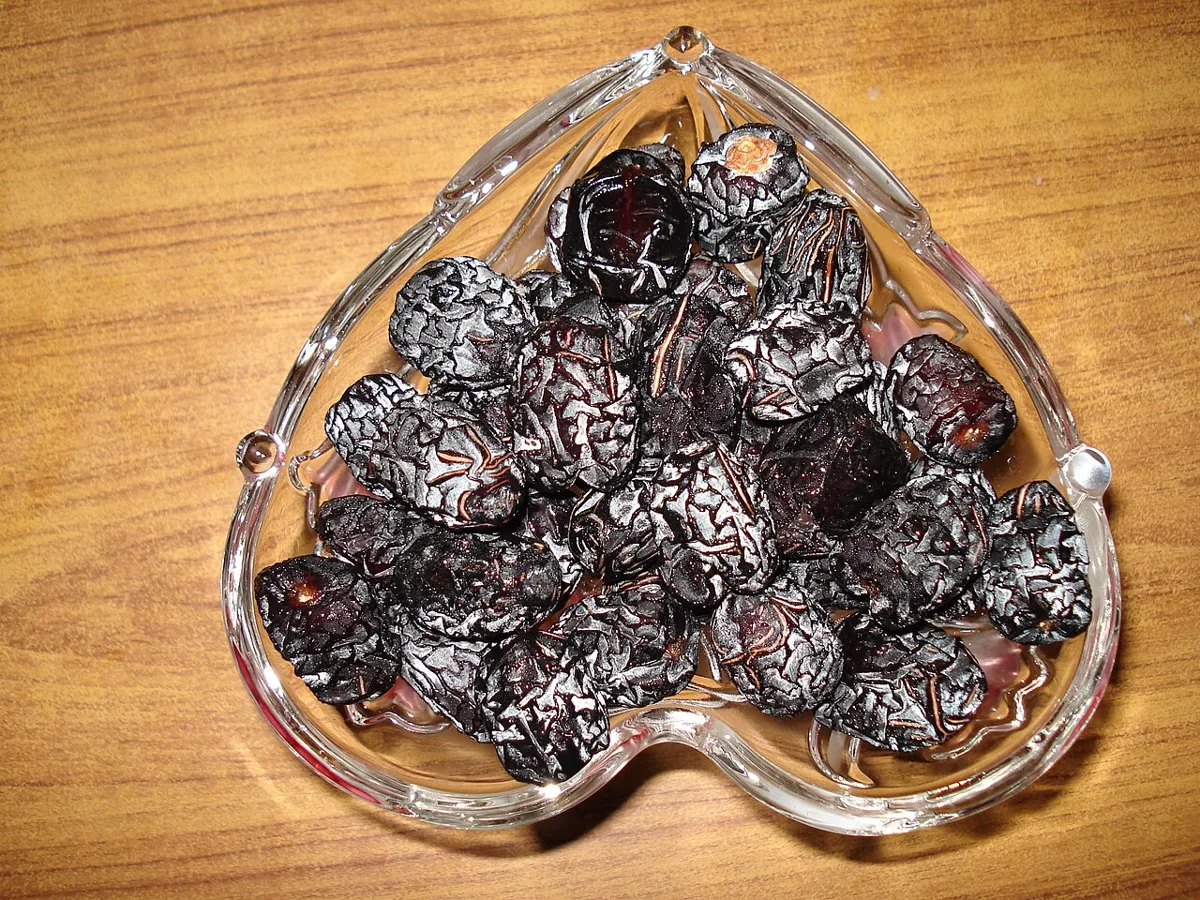
The best-known types of dates in Madinah are Ajwa, Safawi, Mabroom, Anbara and Barni, all grown in the province. Shops in the city also sell dates from elsewhere, such as Sukkari from Qassim and Sagai from the Riyadh region. If you want a meaningful gift, choose Ajwa. For everyday eating at a lower price, choose Safawi. If you love very sweet dates, try Sukkari. This guide compares all ten using published measurements and Saudi sources, and shows you how to buy, store and carry them home.
Madinah’s dates by the numbers
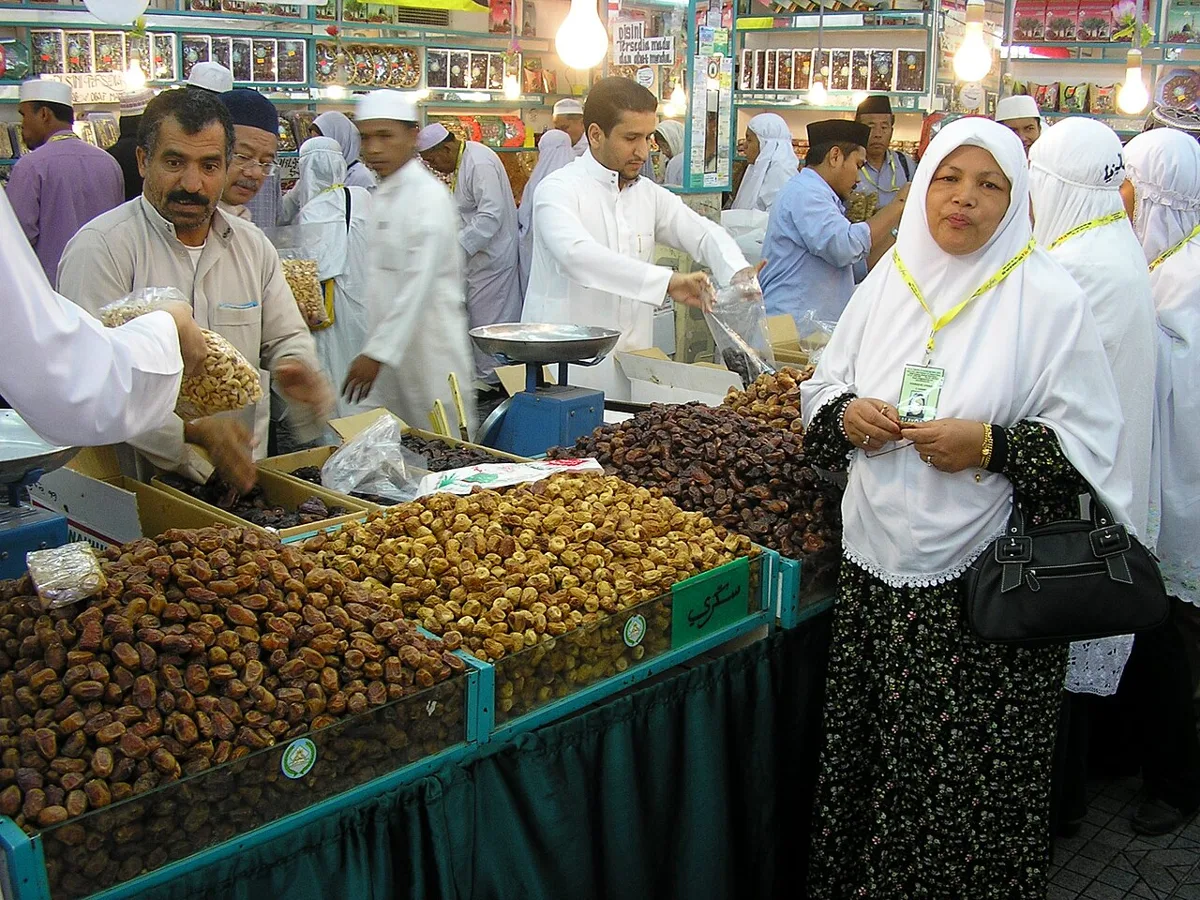
Dates are a major industry here, not just a souvenir. Saudi Arabia reported more than 1.9 million tonnes of dates from over 37 million palms in 2025, and date exports worth SAR 1.938 billion to more than 125 countries, according to the Saudi Press Agency. Arab News reported in July 2026 that Madinah region produces about 347,000 tonnes a year, roughly 18% of the national total and the third-highest of any region.
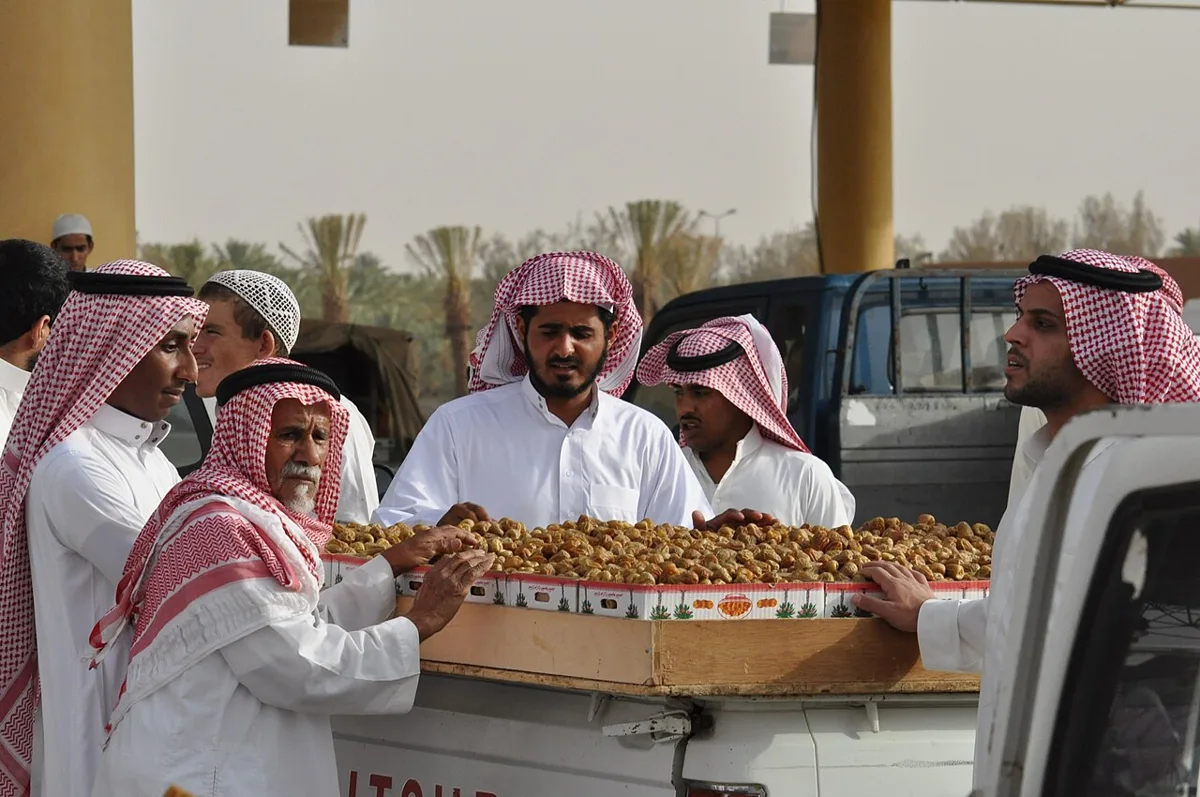
Older figures vary. Reports count anywhere from 5.6 million to 8.3 million palms in the region, and Saudipedia records about 70 varieties grown there. A single market can move a striking amount of fruit: one May 2026 report recorded about 724,000 kg sold, worth roughly SAR 12 million, in just 20 days at a Madinah date market, led by Ajwa, Safawi and Sagai.
The 10 types of dates in Madinah compared
The fruit weights below come from a 2022 study in BMC Plant Biology that measured varieties collected in Madinah. Where the study did not include a variety, we show a dash. A typical date weighs about 10 g, so the differences are noticeable when you hold them.
| Date | Colour when dry | Shape | Avg weight | Eating style | Mainly from |
|---|---|---|---|---|---|
| Ajwa | Black | Round | 9.75 g | Soft, mildly sweet | Madinah |
| Safawi | Reddish brown to near black | Oblong | 9.38 g | Soft, rich | Madinah |
| Mabroom | Reddish brown | Long, slim | 11.75 g | Chewy, less sweet | Madinah |
| Anbara | Brown to dark red | Long, slim | 11.42 g | Large and meaty | Madinah |
| Barni | Brown | Oblong | 9.85 g | Mild, varies | Madinah |
| Sukkari | Golden | – | – | Caramel-sweet, melting | Qassim |
| Sagai | Two-tone, light brown | Oval | 9.64 g | Crisp tip, soft base | Riyadh region |
| Khudri | Brown | – | – | Chewy, subtle | Several regions |
| Medjool | Reddish brown | Large, oblong | 13.07 g | Soft, rich | Grown in many countries |
| Barhi | Yellow fresh, amber ripe | – | – | Crunchy fresh, soft ripe | Most Saudi regions |
Sources disagree on some colours, and individual fruits vary. Saudipedia’s “superior” grade for Anbara starts at 13 g, so premium boxes will be larger than the average shown.
1. Ajwa
Ajwa is the date most Muslims connect with Madinah. It is small, round and almost black, with a soft bite and a mild sweetness that surprises people expecting something sugary. Saudipedia records it as cultivated in Madinah province, with around 800,000 to 900,000 palms. Arab News has also reported it being harvested in Qassim, so “Ajwa” on a label does not guarantee Madinah origin. We found no Geographical Indication registered for it, so ask the seller.
Its fame comes from the narration in Sahih al-Bukhari (5445) and Sahih Muslim (2047), from Sa’d ibn Abi Waqqas: whoever eats seven Ajwa dates in the morning will not be harmed that day by poison or magic. Muslims hold this as a matter of faith. It is not a medical claim, and science cannot test it in those terms. We explain what the research does show further down.
Choose it for: gifts, and for following the sunnah habit. Tip: Ajwa is sold in several grades, so compare size and softness before paying a premium.
2. Safawi
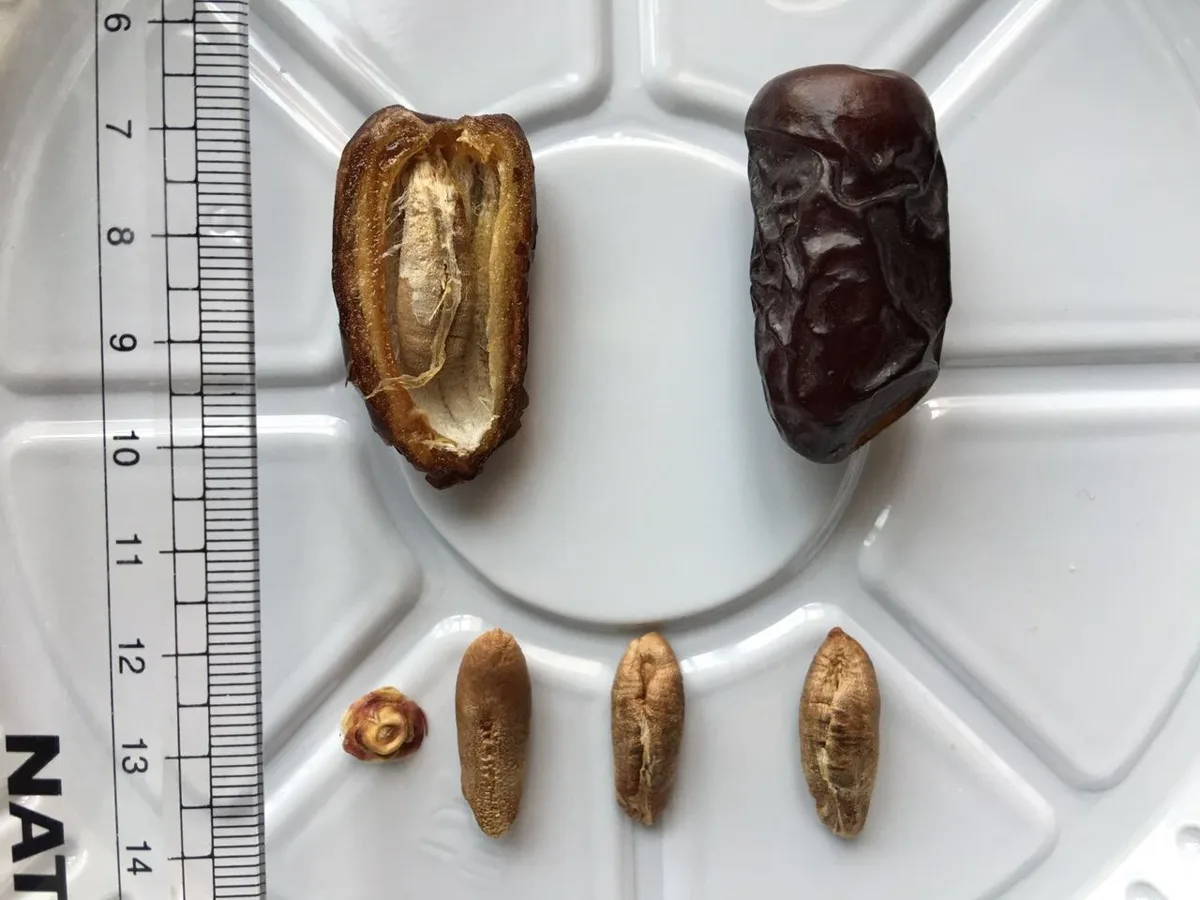
Safawi is dark, soft and rich, and it usually costs less than Ajwa. Its average weight is close to Ajwa’s, so the two can look alike in a box. Safawi’s oblong shape and slightly redder tone are the easiest clues. It ripens in late August, according to reports on the Madinah date season. It is the sensible choice for a box to eat through your stay.
3. Mabroom
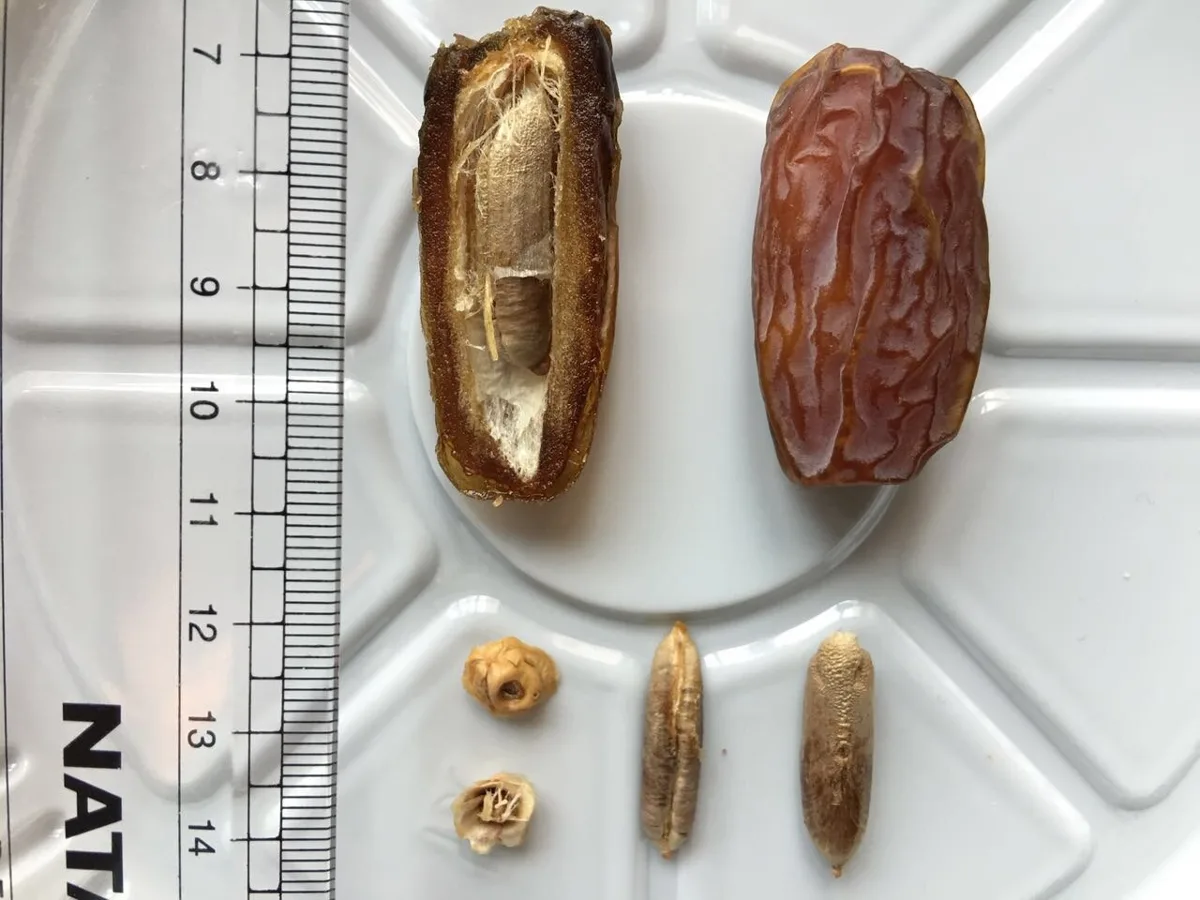
Mabroom is long and slim, with a firm, chewy texture. In the 2022 study it was sampled from Al-Ula, in Madinah province. Published descriptions, mostly from sellers, call it less sweet than many other dates. Because it is firmer and drier, it tends to travel well. It suits anyone who wants something to chew slowly with coffee instead of a date that melts.
4. Anbara
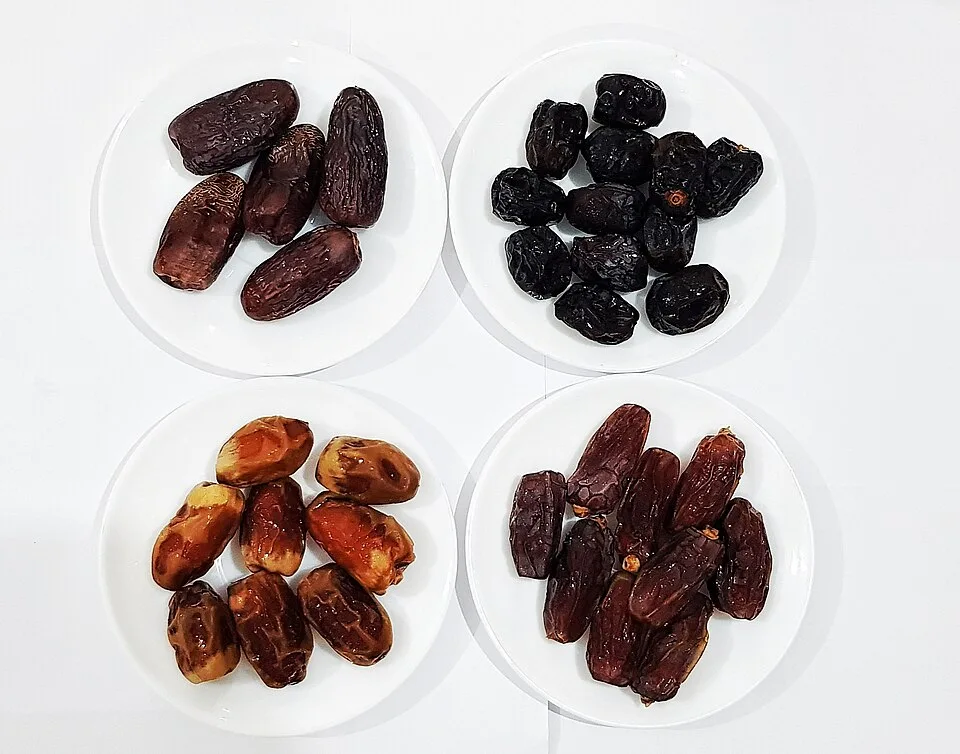
Anbara (also Anbarah or Ambar) is a large, meaty date grown in Madinah province. At a study average of 11.42 g, and with top grades starting at 13 g, it looks impressive in a gift box. Like Safawi, it ripens in late August. Expect to pay more for the larger grades, and check for even size if you are paying for a premium box.
5. Barni
Barni is grown across Madinah province, and the study sample came from Al-Madinah itself. It is brown, oblong and about the same size as Ajwa. We could not find a reliable published description of its taste. Sellers variously call it mellow, nutty, soft or slightly dry, so this is one to taste for yourself before buying a large box. We also have no verified photo of Barni yet, and we would rather show none than show the wrong date. Ask to see it at the Central Dates Market.
6. Sukkari
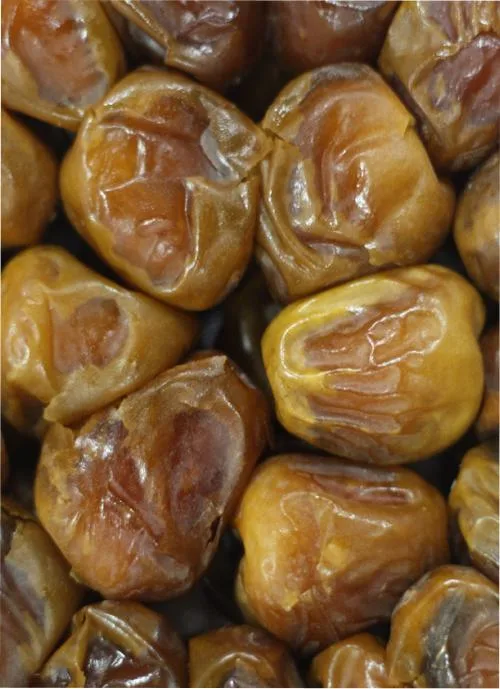
Sukkari takes its name from the Arabic word for sugar. It is golden with a caramel-like, melting sweetness, and it is often served with Arabic coffee. It comes mainly from Qassim, though you will see it throughout Madinah. Surprisingly, one research review lists a glycaemic index of about 43 for Sukkary, which is lower than its taste suggests. See the health section below before treating that as a green light.
7. Sagai
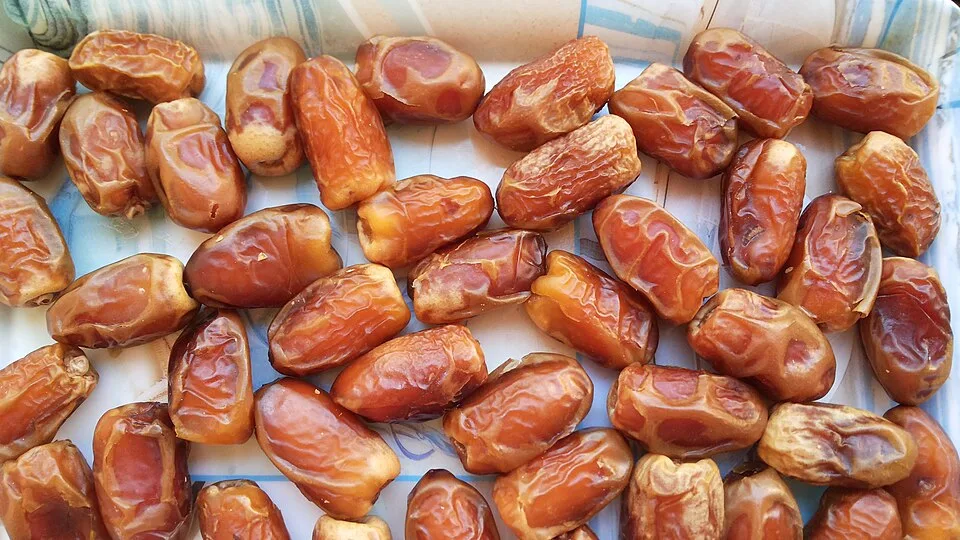
Sagai (also Segaae) is easy to spot. Its tip is golden and crisp, and its base is brown and soft, giving two textures in one bite with a light honey flavour. Saudipedia places it mainly in the Riyadh region, but it sells well in Madinah: it was one of the top three sellers in the May 2026 market report mentioned above.
8. Khudri
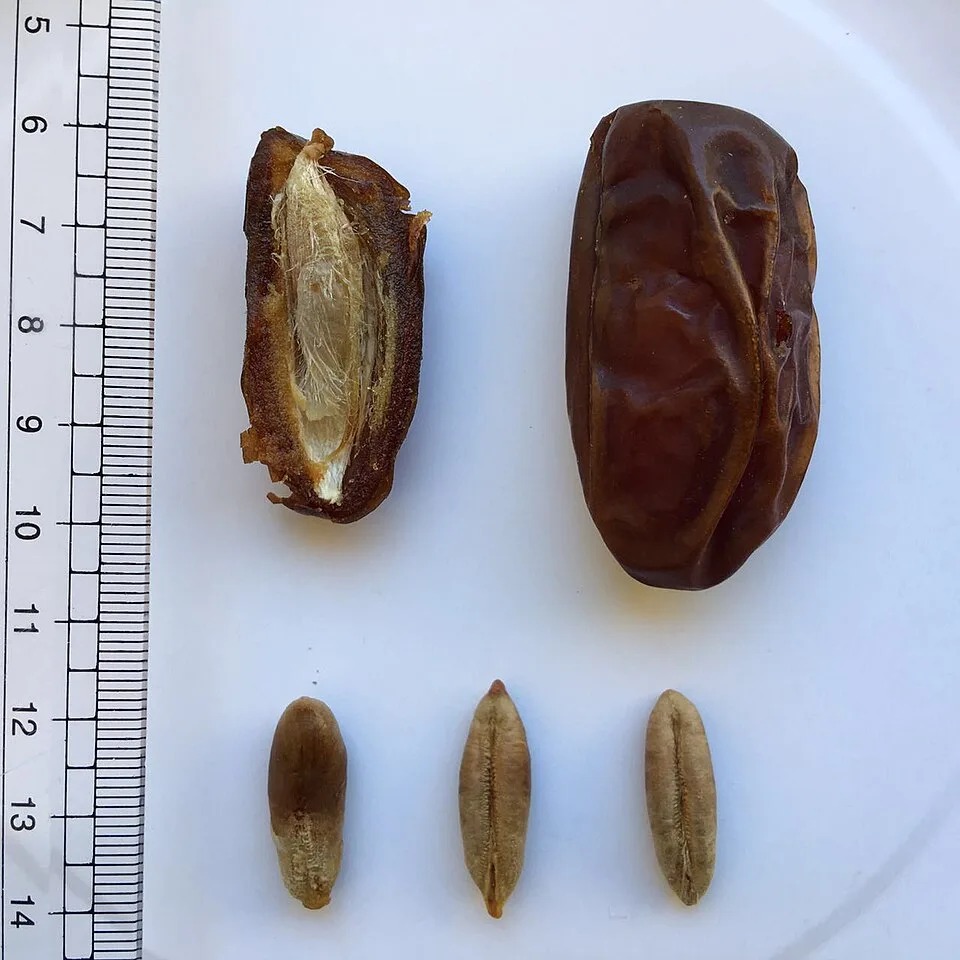
Khudri is a brown, chewy date with a subtle flavour, grown across several Saudi regions. It is widely available in Madinah and generally more affordable, which makes it practical when you need a larger quantity, such as for iftar or for sharing with family and neighbours back home.
9. Medjool
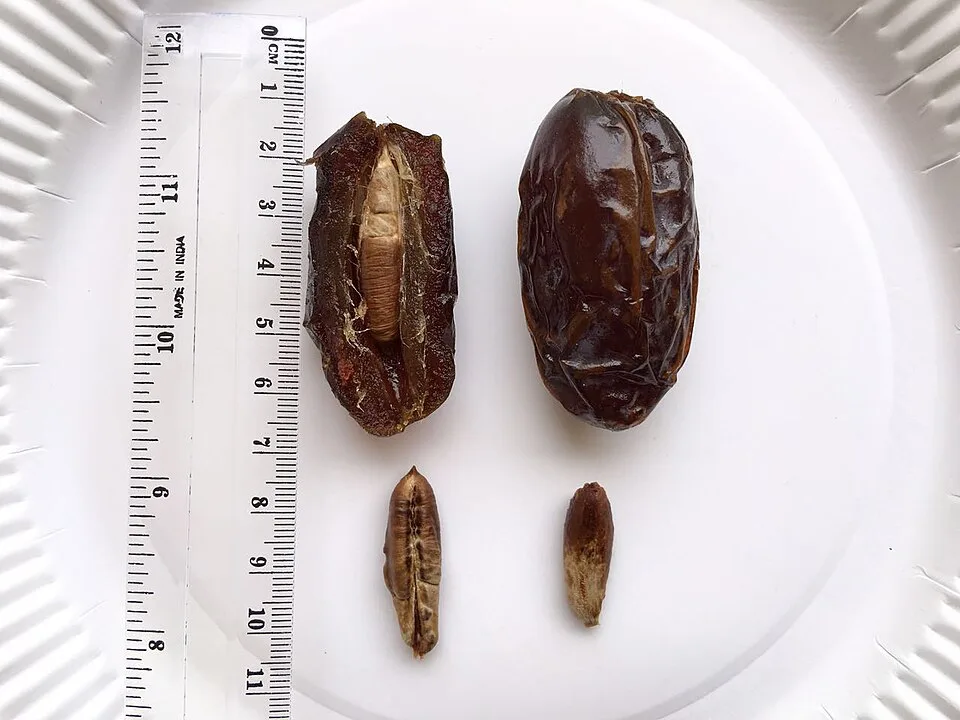
Medjool is the largest date in this list, averaging 13 g in the study. It is soft and rich, and well known worldwide. It is not a Madinah speciality, and it is grown in many countries, so check the origin of the box if that matters to you. It works well stuffed with nuts or used in desserts.
10. Barhi
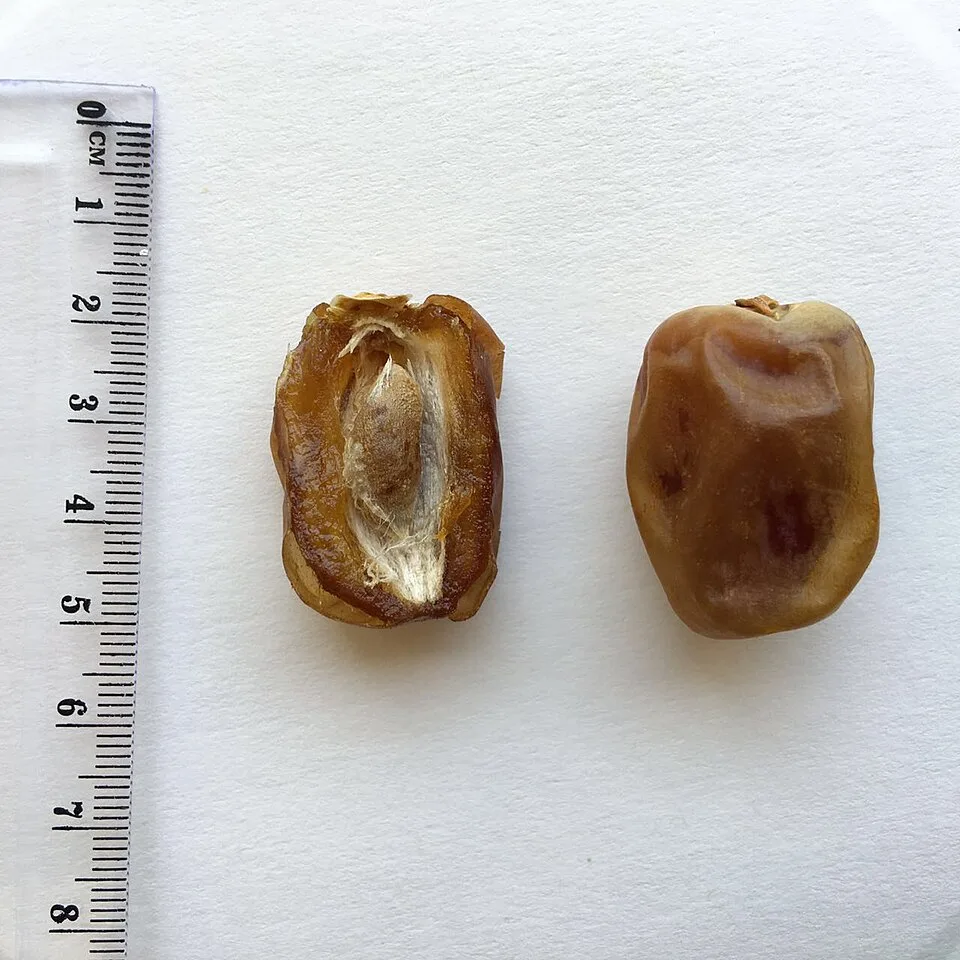
Barhi is the date to eat fresh. At the yellow khalal stage it is crunchy and lightly sweet, and as it ripens it turns soft with a butterscotch flavour. A 2025 study found it keeps only about 20 days, even refrigerated in specialist packaging. It is one to enjoy during your trip in season, not to pack for a long journey home.
Fresh or dried? The four stages of a date
The same fruit is sold at different stages, and they taste very different. According to the UN Food and Agriculture Organization:
- Kimri: green and unripe, with up to 85% moisture. It is not eaten as a date.
- Khalal: yellow or red, hard and crisp, with 50–60% moisture. Barhi is the variety usually eaten at this stage.
- Rutab: the tips turn brown and soft, with 30–35% moisture. Rutab is juicy and very perishable.
- Tamr: amber to nearly black, with under 25% moisture. This is the familiar date, and it keeps naturally.
When is date season in Madinah?
Harvesting starts around early June and runs through to about September, peaking in July and August. Reports say Ajwa reaches the khalal stage in the second half of June and tamr by August, while Anbara and Safawi ripen in late August. The 2026 Madinah Dates Season ran daily in the evenings until 2 August, though dates change from year to year. If you are planning around this, our guide to the best time to visit Madinah weighs date season against the summer heat. Dried dates are on sale all year.
Where to buy dates in Madinah
The obvious starting point is the Central Dates Market (Souq at-Tumoor), where you can compare many sellers in one place. Dates are also sold in shops around the mosque and in malls such as Al Noor Mall and the Taiba Commercial Center. If you are visiting Quba Mosque, note that the 2024 date exhibition was held near there, so check for seasonal stalls.
📍 Central Dates Market (Souq at-Tumoor)→How to choose a good box
- Taste from the box you will buy, not just from the display tray.
- Ask where the dates were grown and which harvest they are from.
- Look at the skin. Light wrinkling is normal for dried dates, but avoid a sour smell, signs of insects or wet, sticky fruit in a sealed pack.
- Compare by the kilo. Fancy boxes can cost far more than loose dates of the same grade.
- Check that sizes match. In a premium box, the fruit should be even throughout.
- Ask for vacuum packing if you are flying, as it protects the fruit and helps keep your suitcase clean.
What should dates cost?
We have not yet surveyed shop prices ourselves. The most recent public figures we found come from a Madinah transport company’s price list, published in December 2025. Use them only as a rough starting point, because grade, size and season all shift the price.
| Date | Reported price per kg |
|---|---|
| Ajwa | SAR 40–80 |
| Mabroom | SAR 25–45 |
| Safawi | SAR 20–35 |
| Sukkari | SAR 15–30 |
Dates and your health: what the evidence says
Dates are nutritious but concentrated. The US Department of Agriculture lists Medjool dates at 277 kcal per 100 g, with 6.7 g of fibre, 696 mg of potassium and 66.5 g of sugars. Those figures are for Medjool, not Saudi varieties, but they show the general picture: five dates is a real snack, not a free extra.
On blood sugar, research is more encouraging than you might expect, but limited. A 2020 review in the journal Foods reported that studies are small and short, and that no safe daily amount has been established for people with diabetes. Measured glycaemic index values vary widely by variety, from the 40s for Sukkary and Sagai to over 70 for Sellag. If you have diabetes, ask your clinician how many dates suit you, and test how your own body responds.
On antioxidants, a 2021 study in Biochemistry and Biophysics Reports found antioxidant properties in Ajwa, Safawi and Sukkari. But this was a laboratory study on extracts, not people. We did not find human trials showing an antioxidant benefit from eating Ajwa. So be wary of any shop that sells dates as a cure. Value them as good food, and as a blessed connection to this city.
Storing dates and taking them home
For a few weeks, keep dates in a sealed container somewhere cool. For longer, the freezer works better than the fridge: postharvest guidance suggests a moisture-proof container at around −18°C. Keep them away from garlic and onions, as dates absorb odours. Soft varieties spoil faster than firm ones, and fresh Barhi or rutab should be eaten quickly.
Rules for carrying dates depend on where you are going, so check before you buy in bulk:
- Great Britain: dates are on the government’s list of fruit allowed in without a phytosanitary certificate.
- United States: dried dates are generally allowed if you declare them, but almost all fresh fruit is prohibited.
- Pakistan and other countries: we could not confirm the current rule, so check with your customs authority and your airline.
Your airline’s baggage allowance still applies. For the rest of your trip, see our top 10 apps for Umrah pilgrims and our guide on getting from the airport to the mosque. For the etiquette of visiting the city, read ziyarah etiquette in Madinah.
Frequently asked questions
❓Which is the best date in Madinah?
There is no single best one. Ajwa is the most prized because of its link with Madinah and the hadith. Sukkari is among the sweetest, Safawi is often good value, and Barhi is excellent fresh in season.
❓Are Ajwa dates only grown in Madinah?
Ajwa is strongly linked to Madinah and Saudipedia records it as cultivated there, but Arab News has also reported it being harvested in Qassim. If origin matters, ask the seller and read the label.
❓How many types of dates are grown in Madinah?
Saudipedia records about 70 varieties in the region. Shops also sell dates from other parts of Saudi Arabia, so what you see on the shelf is not all local.
❓Which date is least sweet?
Ajwa and Mabroom are usually described as less sweet than many others. Sweetness varies by batch, so taste before you buy.
❓Can people with diabetes eat dates?
Research suggests some varieties have a moderate glycaemic index, but the studies are small and no safe daily amount has been set. Ask your clinician how many suit you.
❓Can I take Madinah dates on a plane?
Usually yes, within your baggage allowance, but the rules depend on your destination. For example, the US allows dried dates if declared but prohibits almost all fresh fruit. Check before you buy in bulk.
How we checked this article: we used the Saudi Press Agency, Saudipedia, the FAO, the USDA, peer-reviewed studies (BMC Plant Biology 2022, Foods 2020, Biochemistry and Biophysics Reports 2021) and Arab News. Where sources disagree, we say so. We have not yet carried out our own tasting or price survey. Last checked 30 October 2026.
Related reading
Best Time to Visit Madinah: Weather, Crowds & Prices
The best time to visit Madinah: monthly temperatures, official crowd figures, hotel rates by season, and 2027 Ramadan and Umrah dates.
Top 10 Apps for Umrah Pilgrims in Makkah and Madinah
The top 10 apps for Umrah pilgrims: Nusuk for permits and Rawdah, HHR for trains, plus transport, translation, emergency and food apps.
#Madinah dates #Ajwa #Food #Shopping