Articles
Top 10 Saudi Traditional Food Dishes to Try in Madinah
Osama Naseer · 12 November 2026 · 17 min
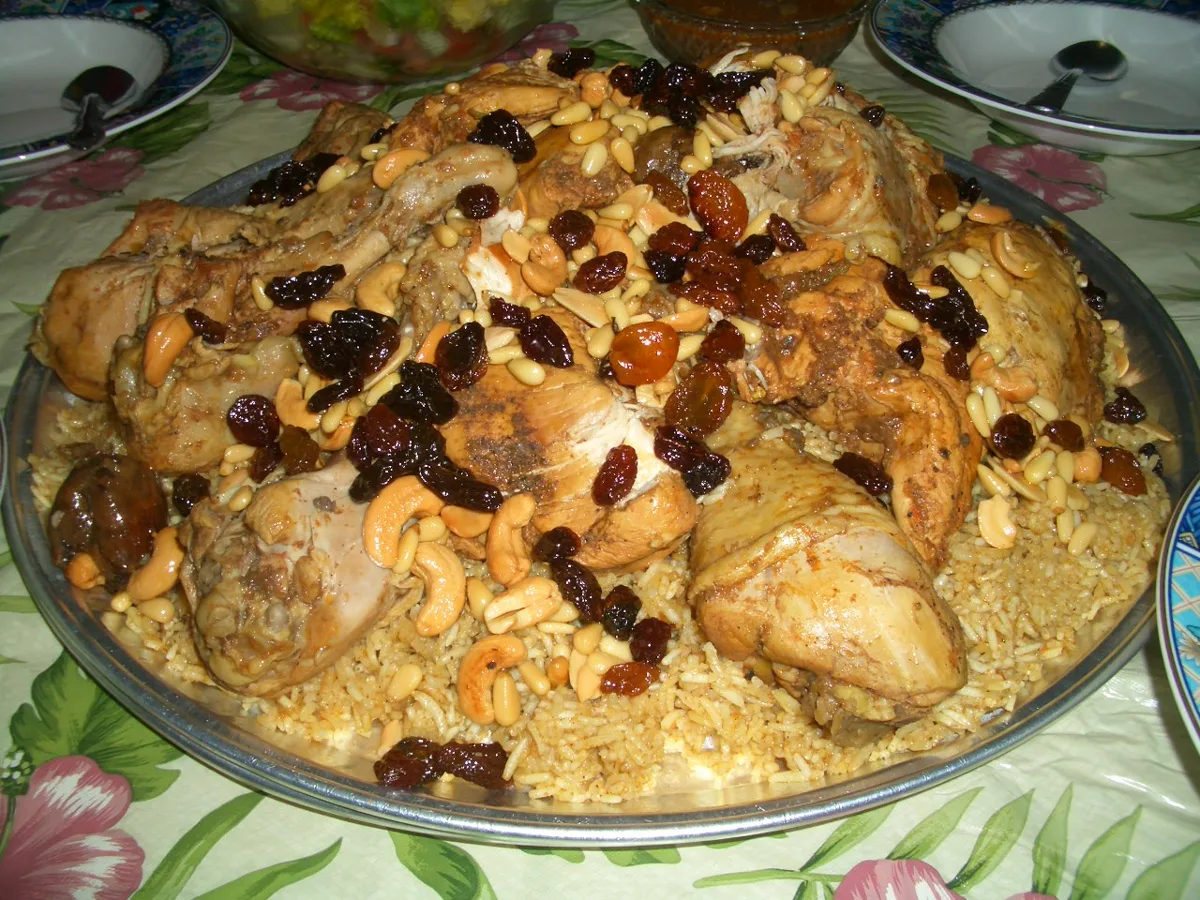
The Saudi traditional food most worth looking for in Madinah is Madini rice, the dish officially chosen to represent the province, along with mutabbaq, balila, harees, jareesh and the Ramadan favourites luqaimat and sambousa. Kabsa and mandi come from the wider Saudi table and are easy starting points if you want rice and meat. This list is not a taste ranking and comes from no tasting of our own. We chose dishes that Saudi sources link to Madinah or to the kingdom’s food heritage, and the order is not a score.
There is a good reason to eat beyond the hotel buffet. Arab News reported in December 2025 that UNESCO had named Madinah a Creative City of Gastronomy the month before. The same report explains how pilgrims who stayed for weeks or months brought spices, recipes and techniques to the city, and how local and foreign dishes adapted to each other. That Arab News piece on Madinah’s culinary identity is worth reading if you want the history behind what is on your plate.
Saudi traditional food in Madinah at a glance
The last column shows the evidence we found for each dish in the city. It is not a guarantee that any one kitchen serves it today. Ingredients are the ones our sources name, and recipes differ between families and restaurants, so ask if you have an allergy.
| Dish | What it is | Main ingredients named | Link to Madinah |
|---|---|---|---|
| Madini rice | Rice dish, recipe varies by family | Rice; saffron in some homes | Official regional dish |
| Saleeg | Rice cooked in milk | Short-grain rice, milk, chicken or meat | Hijazi; chosen for Makkah region |
| Mutabbaq | Stuffed, griddled dough | Dough; meat, egg, vegetables, tuna or sweet fillings | Visit Madinah lists it |
| Balila | Boiled chickpeas | Chickpeas, baking soda, olive oil, lemon, salt | Named by Saudipedia |
| Harees | Thick wheat and meat porridge | Wheat, meat, ghee | Named at the Chefs Market |
| Jareesh | Cracked wheat dish | Wheat; buttermilk or tomato; optional meat | Made in Madinah homes |
| Kabsa | One-pot rice with meat | Rice, meat, chicken or vegetables, spices | Sold at Al Romansiah |
| Mandi | Pit-cooked meat over rice | Lamb, goat or chicken, rice, saffron, salt | Named at the Chefs Market |
| Sambousa | Filled pastry, fried or baked | Dough; minced meat, cheese or vegetables | Ramadan staple |
| Luqaimat | Fried dough balls with syrup | Fermented wheat dough, date syrup or honey | Weddings and celebrations |
1. Madini rice
When the Culinary Arts Commission picked a signature dish for each of Saudi Arabia’s 13 regions, it chose Madini rice for Madinah. Saudipedia records the list as of January 2024, and Arab News reported the selection that same month. If you only look for one dish because of where you are, this is the one.
What exactly you will be served is harder to say. The clearest description we could open comes from Chef Heba Ramadan, who has Madinah roots, speaking to Arab News in December 2025. She describes it as a staple of Madinah homes, with every family making its own version. Some families leave out saffron altogether because a grandfather disliked it, and their children grew up cooking it that way. We could not confirm a single official recipe, so treat any claim of “the authentic version” with some caution. We also have no verified photo of Madini rice yet, and we would rather show none than show a different rice dish under its name.
How to ask: ask for Madini rice by name, then ask what comes with it and whether it has saffron, since the answer will differ from one kitchen to the next.
2. Saleeg
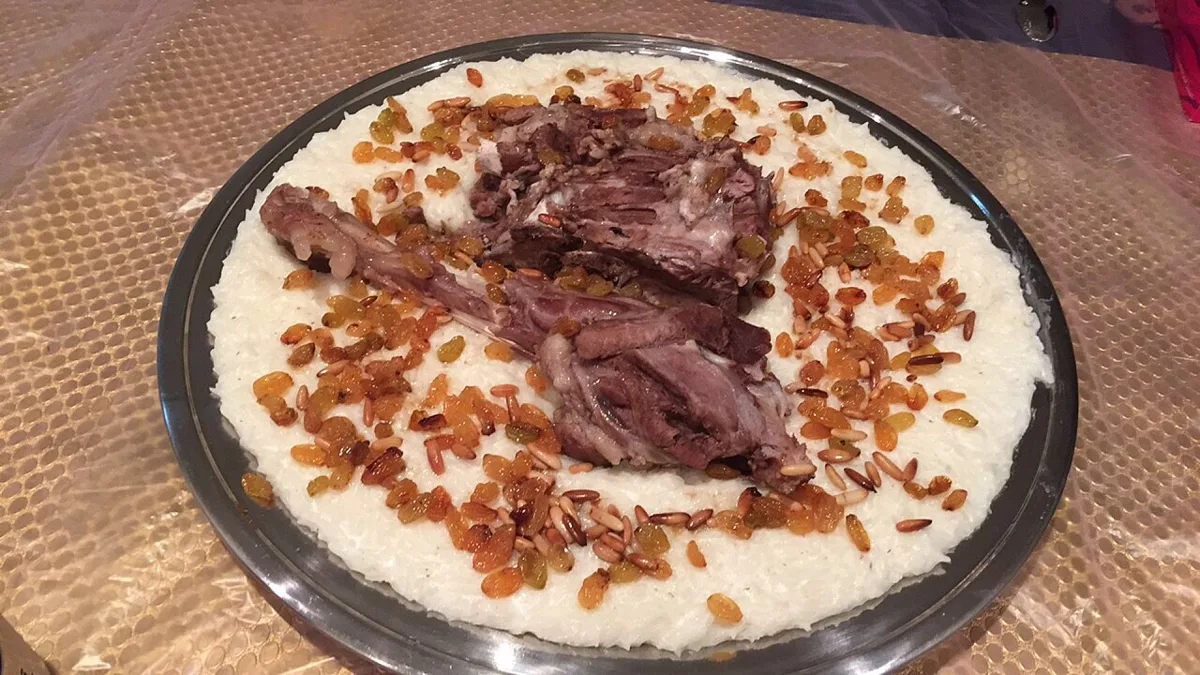
Saudipedia describes short-grain rice, known locally as “Egyptian rice”, cooked with milk for one to two hours until firm, then kept in containers that hold the heat. Meat can be added, and roasted chicken often goes on top when it is served. A January 2024 Arab News report adds that a whole chicken is seasoned with garlic, onion, pepper, cloves, cardamom and a little cinnamon, and that the rice cooks in chicken stock, milk and salt.
It was chosen as the regional dish for Makkah, not Madinah, though the photo’s label and the wider Hijazi tradition place it in the same part of the country. We could not confirm how widely restaurants in Madinah serve it, so ask rather than assume. It contains milk, which matters if you avoid dairy.
3. Mutabbaq
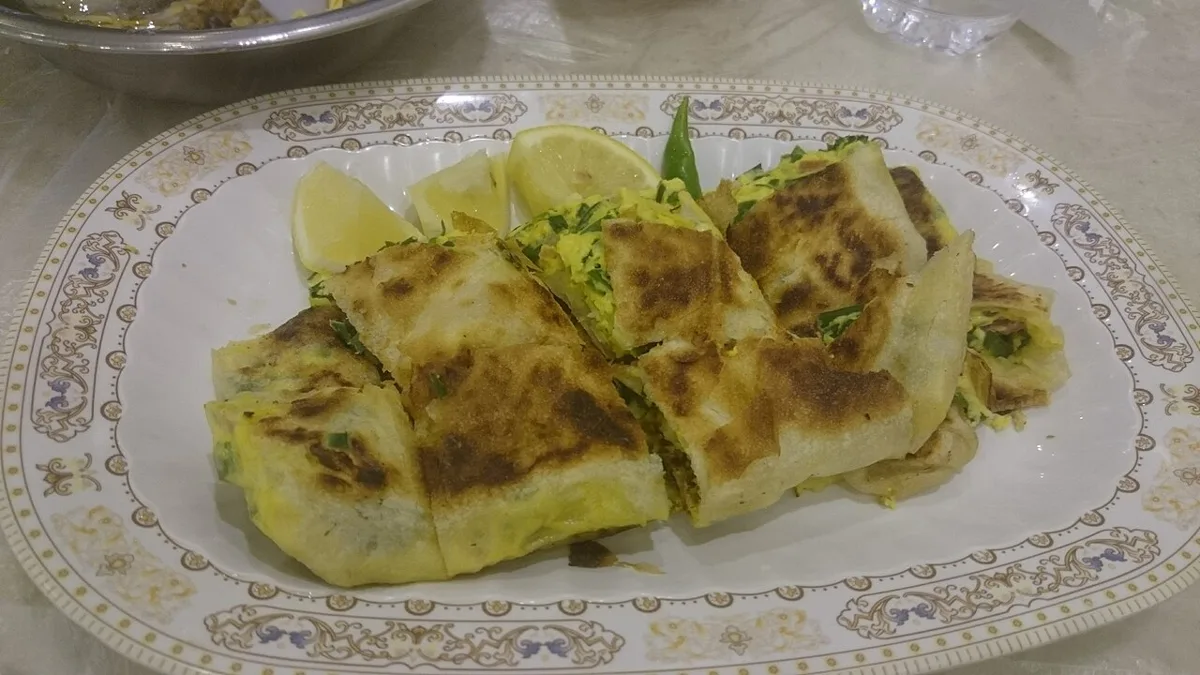
The Visit Madinah website calls mutabbaq (also written mitabbaq) a traditional Hijazi dish, eaten at breakfast and dinner, that Madinah’s families have handed down through the generations. A filling sits between two layers of thin dough, which is sealed into a square and cooked on a hot tin or in an oven.
Savoury fillings include minced meat with leafy vegetables, vegetables with egg, or tuna. Sweet versions use chocolate, butter, banana or cheese. The site suggests it hot with milk or fresh salad, and with lemon juice or hot pepper sauce. It says you can order it at traditional restaurants in the city and at the Chefs Market, which we describe further down.
Saudipedia also lists mutabbaq among the fried foods on Madinah’s Ramadan tables, so this is a dish you may meet at iftar as well as at breakfast.
4. Balila
Balila (Saudipedia spells it balilah) is one of the simplest things on this list, and one of the most closely tied to the city. Saudipedia’s page on Madinah’s traditional dishes names it among the province’s dishes and says its best-known form uses dried chickpeas, baking soda and olive oil. The chickpeas are boiled with salt and lemon over high heat, then left covered on low heat for an hour.
It has a street-food history too. Saudipedia says sellers offer it on religious occasions, usually with traditional songs to draw customers, and it is also a Ramadan food. Arab News lists it with dates, Zamzam water and Arabic coffee at the Hijazi iftar in a March 2023 report. It is also a useful choice if you are avoiding meat, though you should ask what else has been added. We have no verified photo of Saudi balila. The Commons files we found under that name were labelled as other dishes, such as a Sudanese lentil balila, so we show none here.
5. Harees
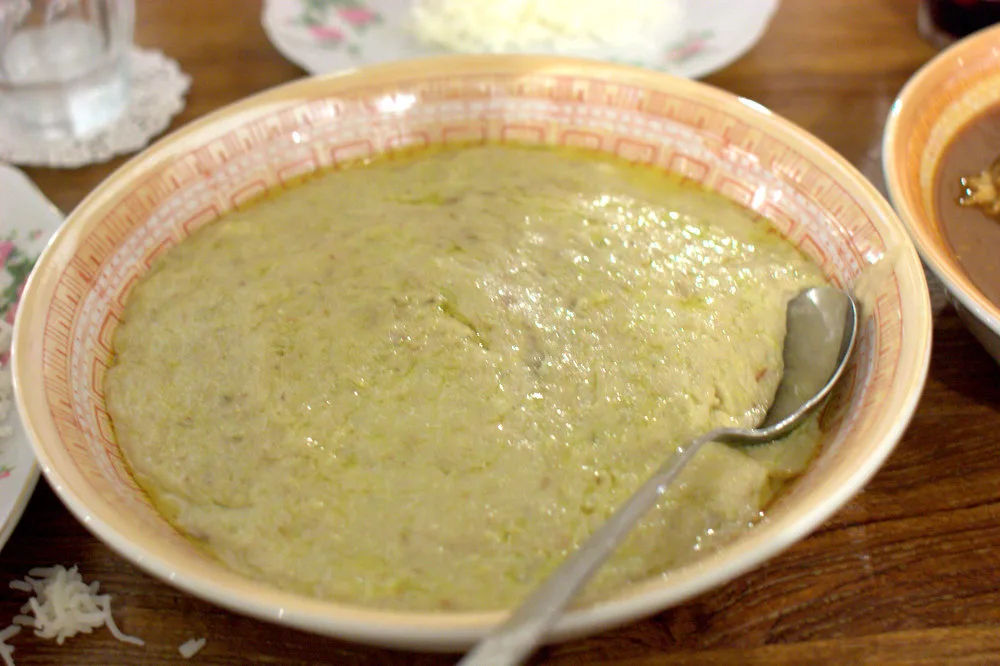
Harees is the only dish here with its own UNESCO listing. UNESCO inscribed it in 2023 on a joint submission from the UAE, Oman and Saudi Arabia, so it belongs to the Gulf as a whole, not to one country. UNESCO names wheat grain, meat and ghee as its ingredients and notes that it is popular in Ramadan, at weddings and in the pilgrimage season, because it is simple to make and serve in large quantities.
Saudipedia describes ground wheat and mashed meat cooked for one to two hours until firm, with ghee added at the end if wanted. It usually comes on its own, without side dishes, and is kept warm in insulated containers. Saudipedia traces it to various parts of the kingdom, especially the Eastern Province, and calls it a winter dish, while UNESCO links it to breakfast and dinner in general. Saudipedia’s Madinah page names harees among the dishes at the Chefs Market.
6. Jareesh
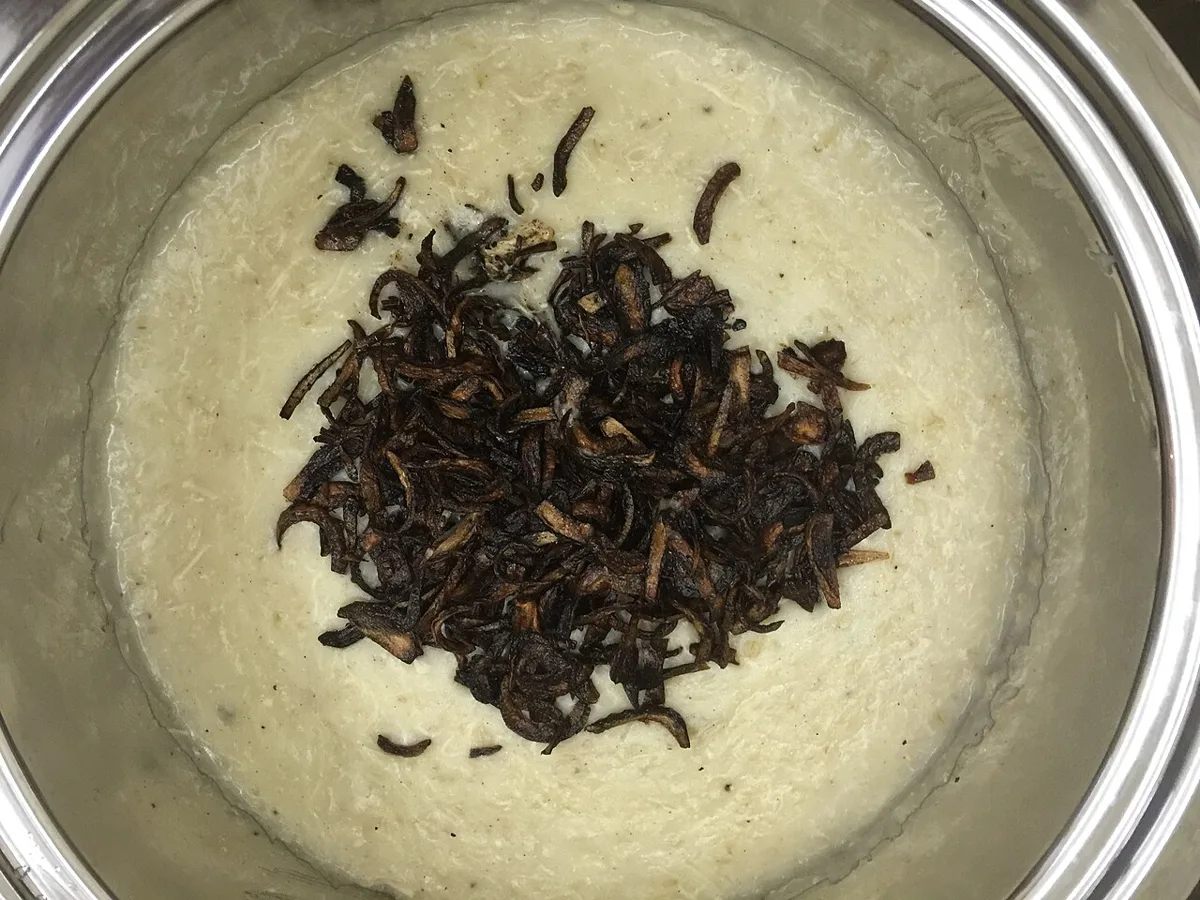
Kabsa is often assumed to be the national dish, but the official answer is jareesh. The Culinary Arts Commission announced it in January 2023 under its National and Regional Dishes Narratives initiative, with maqshush as the national dessert. The National reported the reasons as popularity, authentic flavours, cultural significance, ease of preparation and widely available ingredients.
Sources disagree on the details. Arab News calls it a wheat dish from the northern region, slow-cooked with vegetables and tomato sauce, with lamb optional. The National quotes a chef cooking it in the Najdi style with red crushed wheat, and says the wheat was traditionally ground by hand in a coarse mill. Chef Heba Ramadan told Arab News that, as she knows it, jareesh was first made with only buttermilk and no protein, and that mothers later added chicken or other meat so that children would eat better. Those accounts may simply describe different households. Saudipedia also lists it as a common Eid breakfast.
7. Kabsa
Saudipedia calls kabsa the most diverse traditional Saudi dish in method, spices and presentation. It says the word comes from kabs, meaning pressure, which refers to cooking everything together in one pot. Elsewhere in the Gulf the dish is known as makbous. The base is rice with meat, chicken or vegetables, and although the method is simple, Saudipedia says balancing the spices and getting everything cooked evenly takes experience. The page does not say where the dish began, and we have not guessed.
The custom around it is as interesting as the food. Kabsa is traditionally the first hospitality meal offered to guests at lunch and dinner, placed on one plate shared by four to ten people and eaten with the right hand. For honoured guests, a larger version called al-mufattah may arrive with a whole cooked lamb on top. Our page on Al Romansiah covers one restaurant about 1.2 km from the mosque that specialises in kabsa and mandi.
8. Mandi
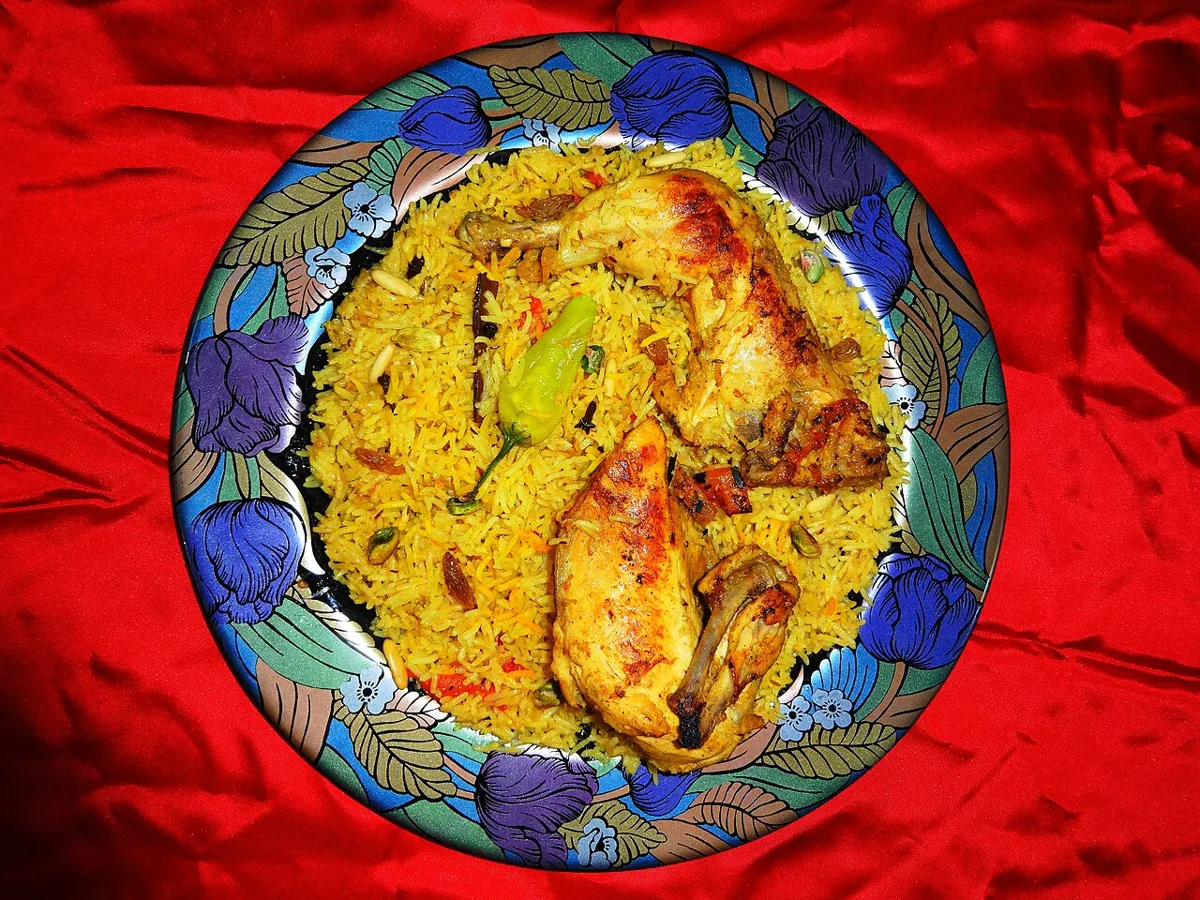
Mandi is about the cooking method. Saudipedia describes a pit heated with fire until very hot, with a whole lamb or goat placed inside, with or without rice, and the pit sealed for about two hours. In restaurants, wood burns down to embers in a round clay or iron pit, and a pot of rice sits below meat or chicken seasoned with saffron and salt, so the fat drips onto the rice.
Saudipedia says mandi is best known in the southern provinces, such as Aseer and al-Bahah, and treats it as related to kabsa. It gives no place of origin, while the photographer’s own label calls the dish native to Yemen, so we would not call it a Madinah speciality. It is still easy to look for here: Saudipedia names mandi heads among the dishes at the Chefs Market, and Al Romansiah serves mandi in lamb and chicken. Portions there are large and meant for sharing, according to our page on the restaurant.
9. Sambousa
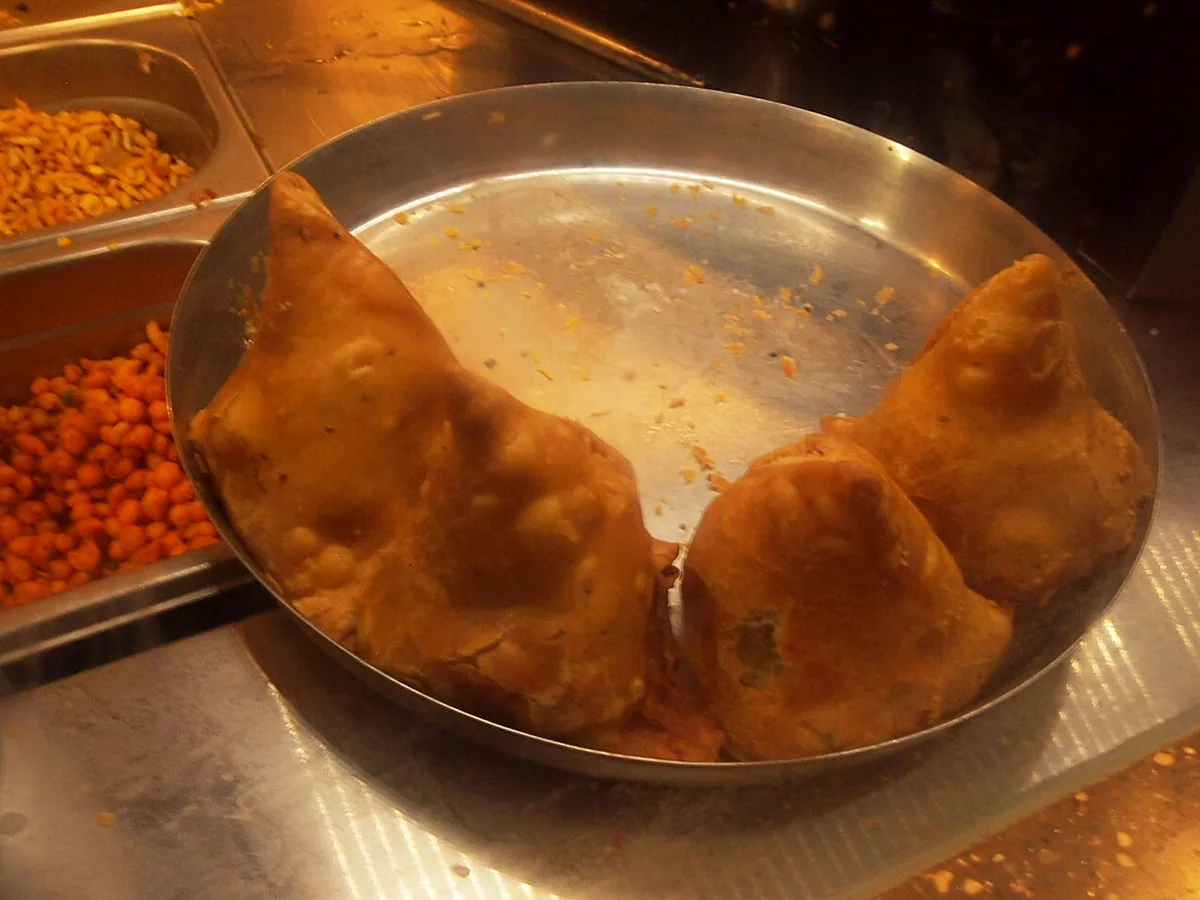
Saudipedia says sambousa (or sambousak) spread first in Makkah and Madinah, where pilgrims and visitors brought their own food traditions with them, and it remains a fixture of the Ramadan iftar. Arab News calls it one of two essential Ramadan dishes in the Hijaz, alongside the barley soup hab.
The dough is made from water, salt and oil, rolled out and cut small. The usual filling is seasoned minced meat, sometimes with chopped boiled egg, greens or toasted pine nuts. Others use salted cheese, or vegetables with minced chicken. The pastry is folded into a half-circle or triangle, then either brushed with clarified butter and baked or fried. Saudipedia’s Madinah page says sambousa puffs are also sold at the Chefs Market. If you visit outside Ramadan, availability may be more limited, so ask.
10. Luqaimat
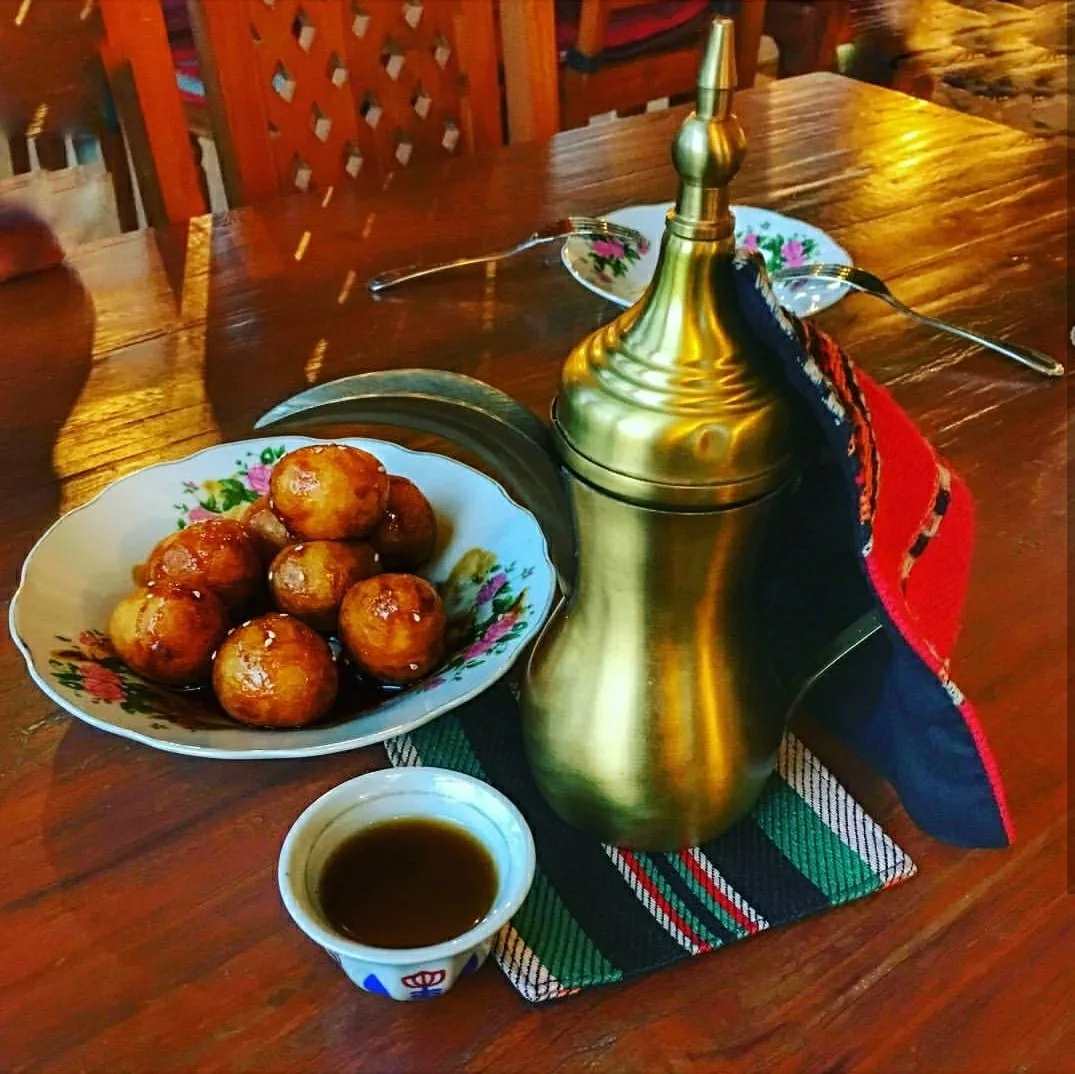
Luqaimat are small rounds of fermented wheat dough, deep-fried until they puff and turn golden, then drizzled with date syrup or honey. Some people soak them in sugar syrup instead, and others eat them savoury with cheese or cream, according to Saudipedia.
Saudipedia ties them especially to the Makkah and Madinah provinces. In Madinah they are also served at holidays, weddings and children’s Quran completion ceremonies, as well as at iftar. The same page notes that the sweet has long been known in the Levant as awama, and that some urban parts of Makkah province call it luqmat al-qadi. So you may meet the same sweet under another name, and confectionery shops across the kingdom sell it. For a local pairing, the dates in our guide to the types of dates in Madinah are the obvious companion to Arabic coffee, and you can compare them at the Central Dates Market.
Other Madinah foods worth asking about
These did not make the ten, either because we could find no photo or because they are breads, drinks and sides, not main dishes. They may be the most local things you find, though, so they are worth a question:
- Shureik: a round bread of dough, water, milk and a little chickpea, topped with sesame and baked in a wood-fired oven, per Saudipedia. Arab News says it is eaten with duggah, a Madini mix of condiments.
- Fatoot: unleavened bread of wheat flour, water and salt, baked on a griddle and served with cream cheese and pickled mango, per a July 2024 Arab News report.
- Wheat soup: Saudipedia says it leads Ramadan tables in Madinah. Chef Heba Ramadan says some cooks use whole milk, others goat milk or no milk, and some add tomato.
- Bukhari rice: named after Bukhara in Central Asia and made with meat or chicken, fat, carrots and rice, then topped with soaked chickpeas and raisins, per the Visit Madinah website.
- Kabuli rice: flavoured with orange zest and citrus juice, and believed to have developed through exchanges among pilgrims, according to Arab News.
- Sobia: a Ramadan drink of barley, flour, dry bread and sugar. Arab News mentions one Madinah family known for making it.
- Debyaza: apricot paste and nuts, made in family kitchens in the last days of Ramadan for Eid breakfast, per Saudipedia.
Where to look for traditional dishes in Madinah
Two sources name the same place. Saudipedia describes the Chefs Market as close to the mosque, estimated to be over forty years old, with many traditional restaurants and heavy crowds in Ramadan and on special occasions. The Visit Madinah website also sends readers there for mutabbaq. Neither gives an address, and we have not confirmed its current state ourselves, so ask your hotel reception how to get there and whether it is open at the hour you plan to go.
For a sit-down meal of rice and meat, Al Romansiah is the one traditional-food restaurant we have a page for so far. That page says lunch after Dhuhr and dinner after Isha are its busiest times, with mid-afternoon usually quieter. Browse all our Madinah places for other stops near your route, and check the prayer times before planning a meal around a crowded hour. If you would rather have something quick, Saudi fast-food chains are a different world from the dishes above.
When each dish is easiest to find
- Ramadan: this is when the widest range appears. Saudipedia lists wheat soup, sambousa, mutabbaq and other fried foods, then sweets such as kunafa and luqaimat. Our guide to the best time to visit Madinah weighs up the crowds of that month.
- Breakfast: the Visit Madinah website lists mutabbaq for breakfast, and UNESCO lists harees for breakfast and dinner.
- Eid: Saudipedia names jareesh as a common Eid breakfast. Arab News describes ta’ateemah as the breakfast feast Hijazis eat on the first day of Eid al-Fitr.
- Cold weather: Saudipedia describes harees as a winter dish, and links maqshush with cold and rainy days.
- Lunch and dinner: Saudipedia says kabsa is the first hospitality meal offered to guests at both, and Al Romansiah’s busiest times are after Dhuhr and after Isha.
Practical tips for ordering
- Share by default. Traditional rice dishes are made for groups. Saudipedia describes kabsa on one plate for four to ten people, so ask about portion size before ordering one per person.
- Eat with your right hand if you join a shared plate. That is the custom Saudipedia describes for kabsa, and UNESCO describes eating harees from large shared dishes too. A spoon is a reasonable thing to ask for if you need one.
- Ask about allergens directly. Harees, jareesh, mutabbaq, sambousa and luqaimat are all wheat-based. Saleeg uses milk, and jareesh may. Recipes change by household, so do not rely on this list if your allergy is serious. Ask someone who can read the label or knows the kitchen.
- Allow for spelling. Saleeg may appear as saleeq, jareesh as jarish, mutabbaq as mitabbaq and balila as balilah. Showing a photo or the Arabic name can help.
- Plan meals around your time at the mosque. Restaurants near it can be busiest straight after prayers, so leave room in your day. Our guide to your first visit to Masjid an-Nabawi explains how a visit works.
- Budget separately. We have not surveyed restaurant prices, so we give none here. For a wider picture, see the figures on the cost of living in Madinah, and for service customs, the guidance on tipping in Saudi Arabia.
If you are still planning your trip, our guides on getting to Madinah and hotels near the mosque will help you decide where to stay, and ziyarah etiquette covers how to conduct yourself around the blessed mosque.
Frequently asked questions
❓What is the national dish of Saudi Arabia?
Officially, jareesh. The Culinary Arts Commission announced it in January 2023, with maqshush as the national dessert. Kabsa is widely thought of as the national dish, but it does not hold that official title.
❓What is the traditional dish of Madinah?
The Culinary Arts Commission chose Madini rice to represent the province. Saudipedia also names manto, yaghmosh, balila, tamees and mutabbaq among the traditional dishes of the province.
❓Is Madinah really a UNESCO food city?
Arab News reported in December 2025 that UNESCO named Madinah a Creative City of Gastronomy in November 2025. The same report describes how pilgrims shaped the city's cooking.
❓Which of these dishes has no meat?
Balila is built on chickpeas, and luqaimat are a sweet. Mutabbaq and sambousa can have cheese, egg or vegetable fillings, and jareesh can be made without meat. Ask in each case, because stock or fat may be used even where no meat is visible.
❓Which Saudi traditional food is best to try first?
There is no single best dish, and we have not ranked them by taste. For a local choice, ask for Madini rice or mutabbaq. For something more familiar, kabsa or mandi are widely known.
❓Where can I find these dishes near Al-Masjid an-Nabawi?
Saudipedia and the Visit Madinah website both point to the Chefs Market near the mosque, though we could not confirm its address. Al Romansiah, about 1.2 km away, serves kabsa and mandi. Check opening hours locally.
How we checked this article: we opened Saudipedia’s pages on Madinah’s traditional dishes, regional dishes, Saudi cuisine, kabsa, mandi, harees, rice dishes, luqaimat and sambousa, the Visit Madinah website’s pages on mutabbaq and Bukhari rice, UNESCO’s harees listing, and reports from Arab News and The National. Where sources disagree, we say so. Photos come from Wikimedia Commons, the dish names on them are the uploaders’ labels, and none is confirmed to be from Madinah. Arab News refused automated reading on 12 November 2026, so its reports were reread in a browser. We have not visited these places, tasted these dishes or surveyed prices. Last checked 12 November 2026.
Related reading
Best Time to Visit Madinah: Weather, Crowds & Prices
The best time to visit Madinah: monthly temperatures, official crowd figures, hotel rates by season, and 2027 Ramadan and Umrah dates.
Top 10 Types of Dates in Madinah and How to Choose Them
The 10 types of dates in Madinah compared: Ajwa, Safawi, Mabroom, Sukkari and more, with taste, size and price, plus tips on how to buy well.
#Food #Saudi culture #Madinah travel